
Dead Horse Beach is a small sandy and rocky beach in Salem, Massachusetts. It is located near the mouth of the Danvers River in the Salem Willows Historic District. It is one of three beaches located at Salem Willows Park.
The beach is believed to have gotten its name because the residents of Salem used to bury their dead horses on the beach during the early to mid-19th century, according to Historical Collections of the Essex Institute:
“About forty years ago, this beach, being very sandy and away from the town, was used as a place of internment for deceased horses, and was known in the vernacular of ‘Down Town’ as ‘Horse Beach’” (Essex Institute 81.)
In 1858, the area became a 35-acre public park, known as Salem Willows Park, after efforts were made to clean up the site.
Some sources also state that the beach was temporarily used to dispose of the carcasses of horses killed in the Great Salem Fire of 1914. It is said that the bodies were dumped into the water so they could float out to sea.
Local legend says that at night you can sometimes hear the sounds of the horses screaming as their barns and carriage houses burned.
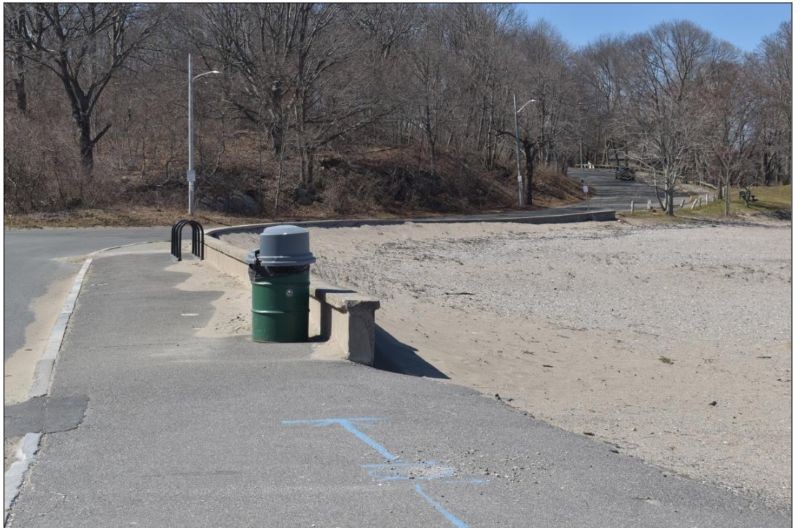
In 1950, the Dead Horse Beach seawall was constructed at the edge of the beach to protect the surrounding area during storms.
On October 9, 1953, three small boys found a human skull that had washed up on Dead Horse Beach. The boys turned it over to the police, who then gave it to Harvard University pathologists for study while a hunt was launched for other parts of the body.
The medical examiner, J. Robert Shaughnessy, said the skull was that of an adult human, and it had apparently been in the water for some time before washing up on the beach. It is not clear from news reports at the time who the skull belonged to or how the person died.
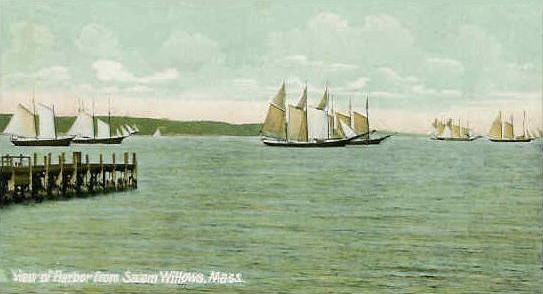
On March 25, 1994, the Salem Willows Historic District was added to the National Register of Historic Places, and Dead Horse Beach was included in the district.
Today, Dead Horse Beach is no longer used for disposing of animal carcasses and has instead become a gathering place for sunbathers and beachgoers.
Sources:
Welch, William Lewis. “Salem Neck and Winter Island.” Historical Collections of the Essex Institute, Vol. 32-33, Essex Institute, 1896, pp. 81-104
“Skull Is Discovered on Beach in Salem.” The Boston Post, 9 Oct. 1953, p. 12.
“Human Skull Found on Salem Willows Beach.” Clinton Daily Item, 9 Oct. 1953, p. 4.
“Historic Seawall Detail: SAL.970 Salem Willows Park – Dead Horse Beach Sea Wall.” MACRIS.com, mhc-macris.net/details?mhcid=sal.970
“Dead Horse Beach.” Salem.org, salem.org/listing/dead-horse-beach/
“Salem Willows.” Salem.org, salem.org/listing/salem-willows/
“Explore the Park.” Salem Willows Arcade and Park, willowsarcade.com/park/