
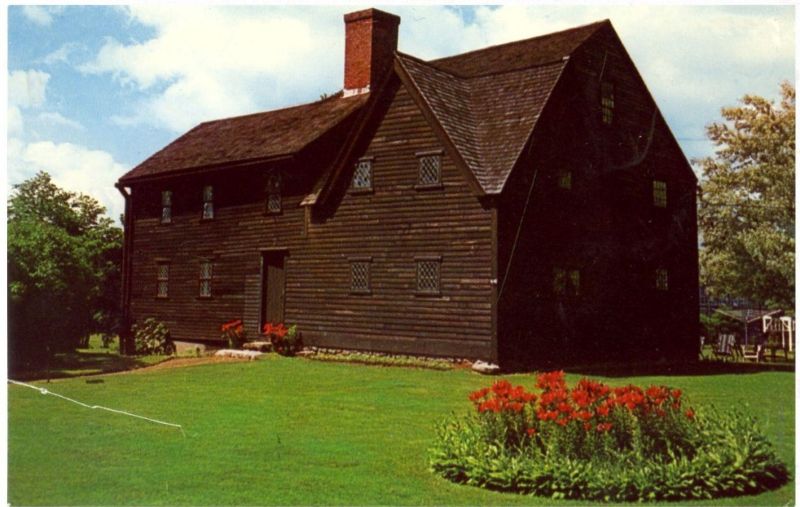
The John Balch House, also known as the Benjamin Balch House, is a historic First Period house on Cabot Street in Beverly, Massachusetts. Built in 1679, it is a two-story clapboard house with dormer windows and a ridge roof.
Balch first lived in the Dorchester Company’s fishing outpost in Gloucester, Massachusetts, in 1623 before relocating to Salem with Roger Conant in 1626 and later became one of the first settlers of Beverly in 1635 when he was granted the title to this land on November 11, 1635.
The original John Balch House was built here in 1636 and may have possibly been incorporated into the present structure. When John Balch died in June 1648, he left the property to his sons Benjamin Balch and Freeborn Balch.
In 1658, Benjamin secured possession of his brother’s share of the property and became the full owner (Pierson 98.)
This house is currently composed of structures from three different architectural periods. The northeast portion of the house is the oldest, having been built around 1679, most likely by Benjamin Balch.
In 1690, Benjamin’s 19-year-old son, David Balch, was living in this house when he became ill and died. Two years later, Mary Gage testified during the Salem Witch Trials that when David was ill, he claimed to be tormented by witches at the foot of his bed, whom he identified as Sarah Wildes, Dorcas Hoar, and an unnamed woman from Marblehead who is believed to be Wilmot Redd.
On January 4, 1703-4, upon his grandson’s coming of age, Benjamin Balch conveyed the house to his grandson, Benjamin Balch Jr., who lived in the house with him.
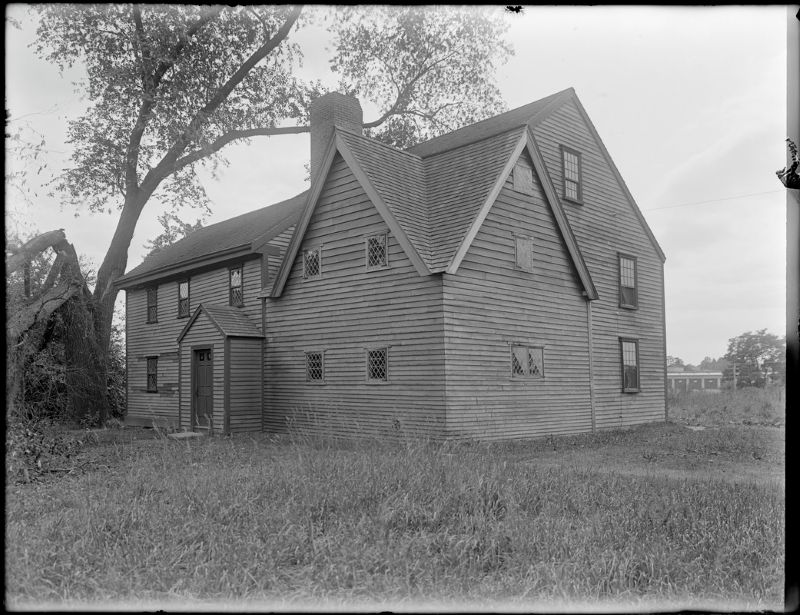
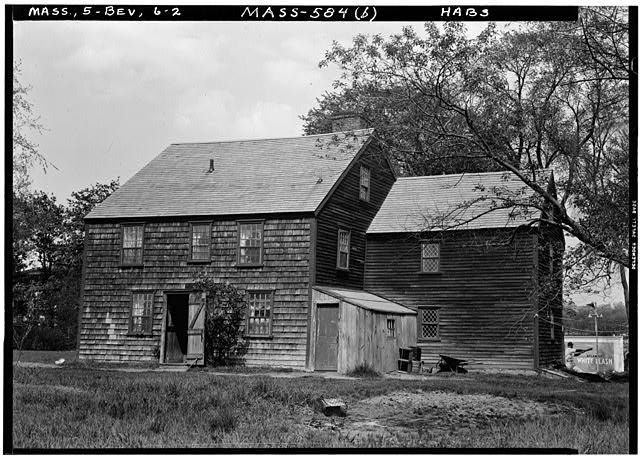
In 1721, a large two-story addition was built on the southern part of the house, and a second story was added to the older part of the house.
Benjamin Balch Jr. died on January 8, 1749-50, and the house passed to his wife, Mercy. After her death, it passed to their daughters Marcy Lovett, Mary Woodberry, Martha Trask, and Deborah Dodge and to their grandson Benjamin Balch Lovett. It later came into full possession of Deborah Dodge. When Deborah died, the property passed to her son Cornelius Dodge (Perley 222.)
Cornelius Dodge died April 27, 1837, and the property passed to his son Azor Dodge. Azor conveyed a life estate to his son Joshua F. Dodge on December 10, 1869, and the rest to Joshua’s daughters, Addie and Martha Dodge.
After Martha Dodge died January 14, 1880, her mother, Mary Alice Lufkin, inherited her half of the property. She released her half to her daughter Addie (Dodge) Herrick on April 30, 1913, making Addie the sole owner of the property.
In the late 18th century or 19th century, a large addition was added on the west side of the house.
On June 8, 1916, Addie Herrick transferred the title of the house to Joseph Balch, John Balch, Franklin G. Balch, Francis N. Balch, and William Summer Appelton of the Balch Family Association, who made plans to restore and preserve the historic house (Perley 222.)
The Balch Family Association hired preservation architect Norman Isham to restore the house.
In 1919, the John Balch House was converted into a tea room and gift shop called the Ye Balch Arms. The renovations were done under the direction of James A. Marsters of the Beverly Historical Society.
In 1920, the Balch Family Association began raising money to recoup the $3,025 it purchased the house for so it could then give the house to an organization that would restore and preserve it.
The association struck a deal with the Society for the Preservation of New England Antiquities: if they raised enough funds, SPNEA could give the house to any organization it chose.
To raise the money, the association sought donations from the thousands of Balch descendants across the country.
In 1921, the tea room at the Balch House either closed or moved, and an ad was placed in the Beverly Evening Times listing furniture for sale at the house, including four stoves, four tea tables, 12 chairs, a lounge, and other items.
In 1932, the Balch Family Trust turned the house over to the Beverly Historical Society, who later opened it to the public as a historic house museum.
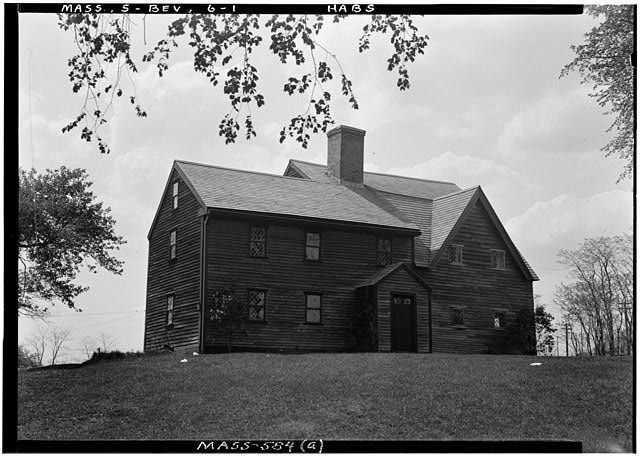
In 1961, the house was restored in an attempt to recreate its original 17th-century appearance.
Although the house was originally believed to have been built in 1636, dendrochronological analysis conducted in 2006 dated the earliest portion of the house to 1679.
Sources:
Perley, Sidney. “Beverly in 1700. No. 2.” Historical Collections of the Essex Institute, Vol. LV, No. 2, April 1919, pp. 209-229.
Pierson, David Lawrence. History of the Oranges to 1921. Reviewing the Rise, Development, and Progress of an Influential Community. Vol. 4.
“Old New England Houses Described.” The Boston Globe, 11 Nov. 1915, p. 10.
“Plan to Preserve John Balch House.” The Boston Herald, 11 Nov. 1915, p. 13.
“Ye Balch Arms.” Beverly Evening Times, 15 Aug. 1919, p. 6.
“Effort Made to Save Old Balch House.” Beverly Evening Times, 30 Oct. 1920, p. 1.
“House Worth Preserving.” The Cambridge City Tribune, 6 Jan. 1921, p. 3.
“Balch House.” The Historical Marker Database, hmdb.org/m.asp?m=47949
“The Balch House.” Beverly Historical Society, historicbeverly.net/properties/the-balch-house/
“Historic Building Detail: BEV.185 Balch, John House.” MACRIS, mhc-macris.net/details?mhcid=BEV.185