
Tewksbury State Hospital was a psychiatric hospital located in Tewksbury, Massachusetts. Built in 1854, it was originally established as an almshouse before later being converted into a hospital.
The property also features a 10-acre cemetery, established in 1854, in a white pine grove abutting East Street, on the east side of Livingston Street. The cemetery contains the graves of 15,000 paupers who died between 1854 and 1939. The graves are marked by numbered and lettered stones.
The following is an overview of the history of Tewksbury State Hospital:
Tewksbury State Hospital in the 19th Century:
Although the almshouse building was designed for a capacity of 500 people, after it officially opened on May 1, 1854, the population reached 668 at the end of its first week, in large part due to 300 paupers sent from the Deer Island almshouse the first week of May.
By May 20, the population was over 800 patients, and by December, a total of 2,193 people had been admitted.
The original almshouse buildings were identical wood-frame structures consisting of four-story central cores, flanked by three-story wings that extended back 125 feet in length. The central core served administration purposes while the wings housed patient dorms.
In 1860, the superintendent’s house, an Italianate-style farmhouse, was constructed on the property as well as a couple of cottages.
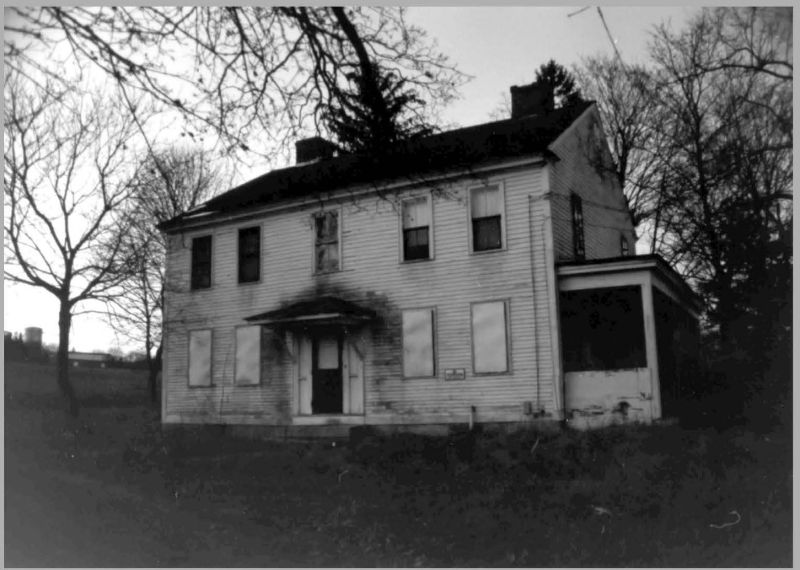
In 1866, Tewksbury was still operating as an almshouse but had also established a large department for harmless but chronic mentally ill poor people. It was the state’s first facility to accept cases of chronic mental illness specifically.
In February of 1876, Tewksbury admitted what would become its most famous patient, a young girl named Anne Sullivan, who was suffering from a bacterial eye disease that partially blinded her, and her brother Jimmie, who was ill with tuberculosis.
Jimmie Sullivan died four months later, but Anne eventually transferred to the Perkins School for the Blind, where she received treatments that partially restored her sight. She grew up to become a teacher, soon making a name for herself as Helen Keller’s teacher.
In 1883, a scandal erupted at the facility after allegations of misconduct arose at the almshouse, which included reports of patient neglect, starvation, grave robbing, the sale of corpses to medical schools, accidental deaths of infants by sedating them with morphine, and the theft of inmates’ clothing and possessions (“Traffic in Bodies at Tewksbury,” 1883).
A series of hearings were held before the Committee on Charitable Institutions to investigate the allegations. The investigation was eventually dropped, but it did persuade the administration to improve conditions at the facility.
In the 1890s, the almshouse began being converted into a state hospital, and the original wood frame buildings were demolished and replaced with more durable, fireproof masonry buildings.
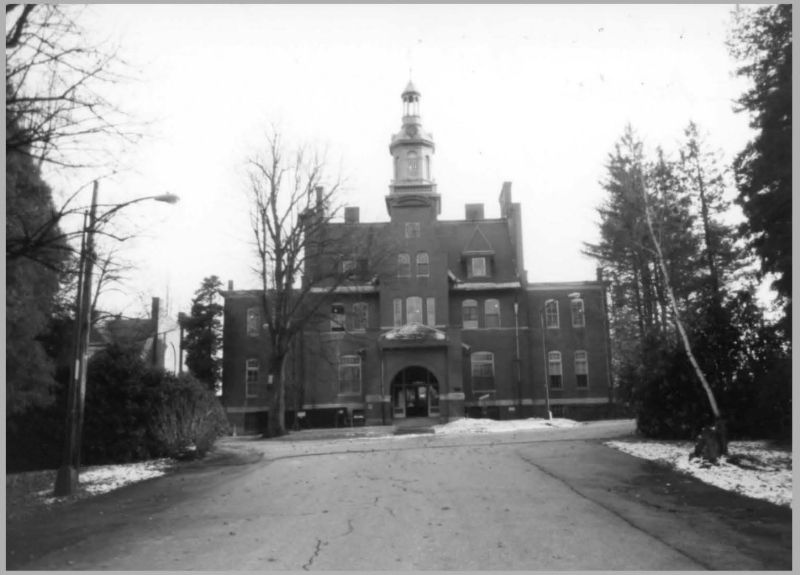
In 1894, the administration building and the Anne McDonald House were constructed on the quad. The administration building was constructed immediately in front of the old 1854 almshouse, which was then torn down.
This administration building, a Queen Anne-style building, was designed by Boston architect John A. Fox and is a two-and-a-half-story red brick building with arched windows and a steeply pitched slate roof surrounded by a copper-clad clock tower. The building also features a rear ell with round-arched windows.
The Anne McDonald House served as the superintendent’s house and is a two-story red brick building with a slate hip roof. It was constructed perpendicular to the administration building on its west side.
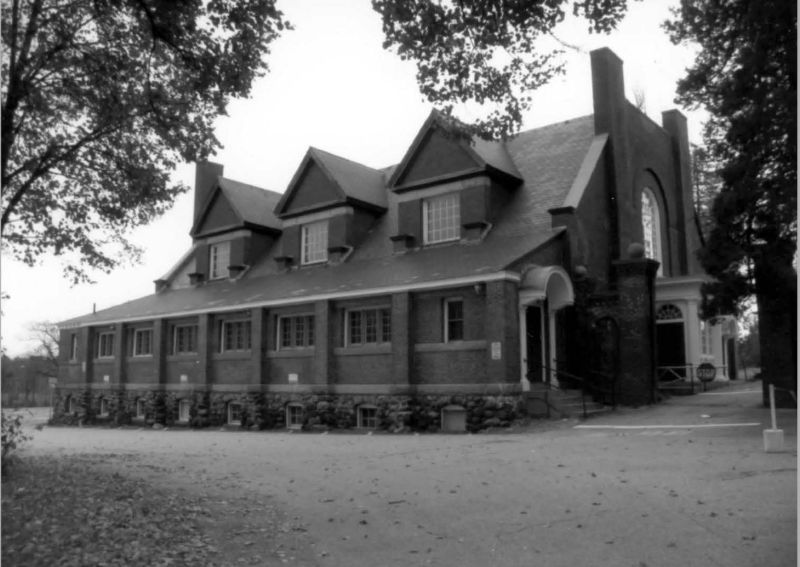
In 1896, the chapel was built next to the administration building. It was designed by an architect named G.C. Adams and is a one-and-a-half-story, Queen Anne-style, red brick building with granite trim and a slate gabled roof with three large gabled dormers on both sides.
A large dairy barn was constructed on the campus in 1898. The east wing of the dairy barn is a long, one-story clapboarded barn with a slate hip roof and six ventilating turrets. The west wing is a one-story building that houses 15 open vehicle bays. The barn was used to house dairy cows that produced fresh milk for the hospital.
Tewksbury State Hospital in the 20th Century:
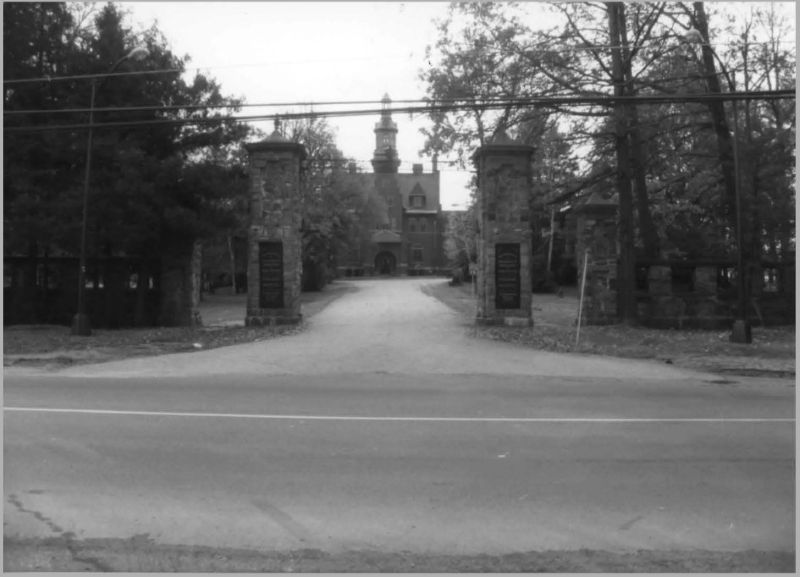
In 1900, the main gates to the campus were constructed, as well as a stone pool, a number of shops, sheds, garages, cottages, and a power plant, and the piggery and hennery sites were established to provide fresh pork and eggs for the hospital.
Also in 1900, the male and female tuberculosis hospitals were built, and the hospital’s name changed from the State Almshouse to Tewksbury State Hospital.
In 1901, the male asylum, named the Anne Sullivan Center after the hospital’s most famous patient, was constructed. The Anne Sullivan Center is a Queen Anne-style building that features an X-shaped building plan that allows maximum light and air into the patient’s rooms.
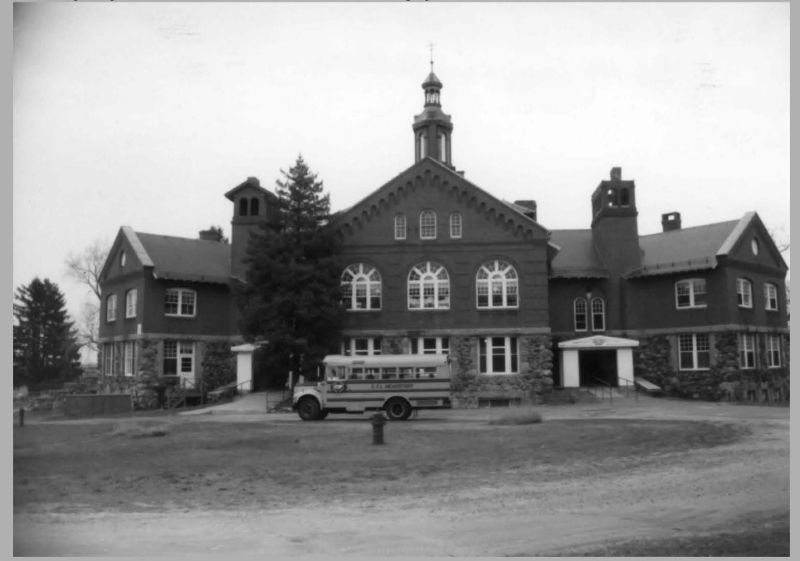
Two years later, the female asylum, a Romanesque Revival-style building, was built. The female asylum was designed by John A. Fox and is a two-story red brick building with a slate hip roof with domed turrets.
One of the hospital’s biggest unsolved mysteries took place on October 27, 1903, when 11 patients in the male ward were poisoned when they were given water mixed with belladonna. One of the patients died the following day, but hospital officials insisted it was due to natural causes.
It was later determined that a patient from the male ward was most likely responsible for the poisoning, but the culprit was never found (“Patients Were Poisoned,” 1903).
In 1905, the Southgate building, Hall #1 and Hall #2, were constructed. The Southgate building is a two-and-a-half-story, Queen Anne-style, red brick building with a bracketed gabled roof and large dormer windows. Its name derives from the fact that it formed the southern boundary of the campus, and it features a two-story, round-arched gateway with heavy, paneled wood doors.
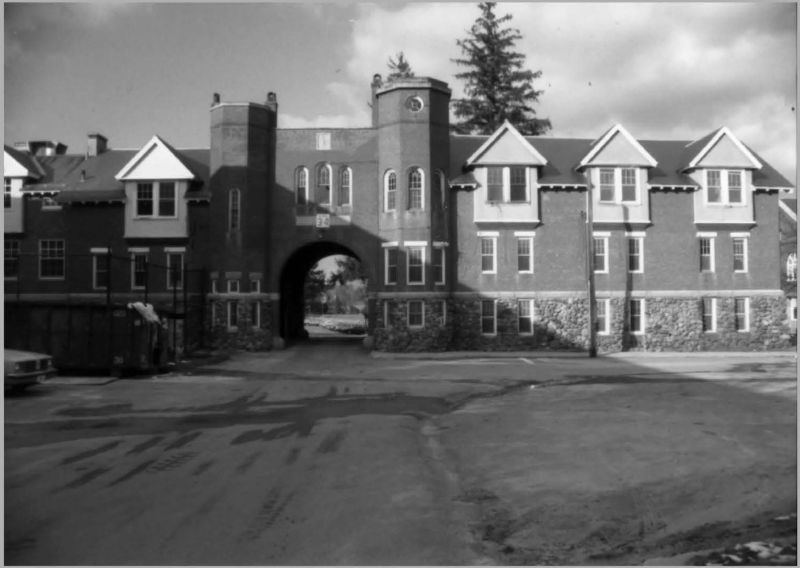
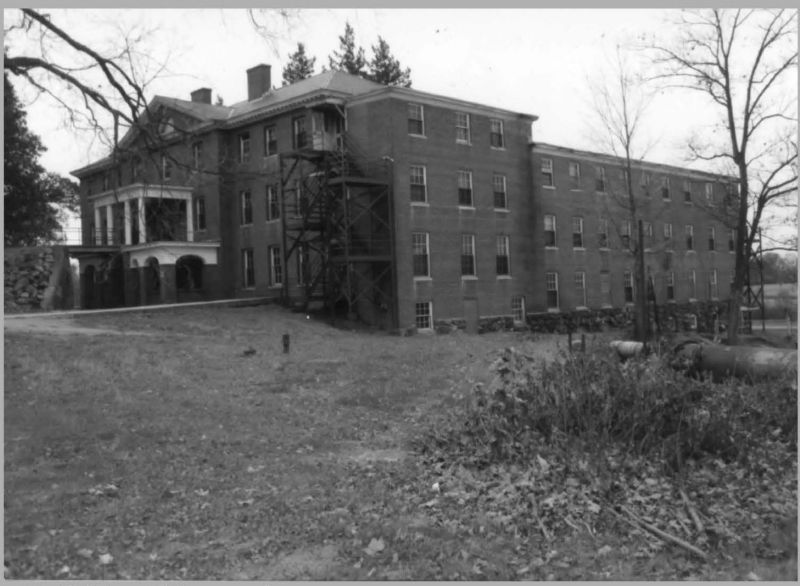
Halls #1 and #2 are three-story red brick buildings of Colonial Revival-style design with slate hip roofs. Halls #1 and #2 served as a residence for male officers.
In 1909, the hospital was renamed the Massachusetts State Infirmary.
The male employee’s home, a Tudor Revival-style building, was constructed immediately south of the male asylum in 1912. It is a two-and-a-half-story red brick and timber building with a slate gable roof.
In 1916, a judge for the Lowell Police Court found that at least 80 people had been committed to the psychiatric ward at Tewksbury State Hospital without any process of law whatever and without a court order. An investigation was launched to look into the matter (“Insane Men Committed Illegally,” 1916).
On October 16, 1916, a violent attack took place at the hospital when a patient named Thomas H. Kelleher attacked another patient, named Daniel Cronin, with a spade and killed him. Kelleher was later relocated to the Bridgewater Hospital for the Criminal Insane.
A fire broke out in the tuberculosis building on March 6, 1917. The building had been abandoned about 18 months prior. Firemen from Lowell and Billerica were called in to assist the Tewksbury Fire Department.
In 1920, the assistant superintendent’s house, the greenhouse, and a one-story farm office were constructed. The assistant superintendent’s house is a two-story red brick Colonial Revival-style house that was built across from the superintendent’s house on the east side of the administration building.
In 1930, Hall #3, the Special Building, and the married couple’s home were constructed. The married couple’s home is a two-story, red brick, Colonial Revival-style building with a combination gable and hip roof. It is the only dormitory in the complex built specifically for married employees.
The Special Building is a red brick Colonial Revival-style building with wood trim and a slate gable roof.
In 1936, the dining hall and kitchen was constructed, which is a large Beaux Arts-style red brick building.
On February 4, 1938, yet another violent attack occurred when a 79-year-old patient named John Mack shot and killed three fellow patients at the hospital and critically wounded two more. He then fled by the fire escape but was captured three hours later by two Lowell policemen (“Chelsea Maniac Kills Three at Tewksbury,” 1938).
Mack later confessed that he had been planning the shooting for two years and that he smuggled a pistol into the facility so he could shoot his five victims who he claimed were bullying him, telling the court during his arraignment that “they bothered me.”
Just a few months later, four patients died after drinking denatured alcohol at a party on the premises in April (“Poison Liquor Costs 3 Lives,” 1938).
In 1939, the hospital was renamed the Tewksbury State Hospital and Infirmary.
In 1939, the Nichols Building was constructed on the southeast corner of the main building complex. It is a two-story, red brick, Colonial Revival-style building with a slate hip roof and a central cupola.
In May of 1942, it was reported in the Boston American that two patients had recently died by suicide at the hospital, but their deaths were not reported to the police. When questioned by the police, hospital officials stated that they didn’t feel they needed to report it to the local authorities.
In March of 1945, over 300 patients barely escaped a fire that broke out in the chapel. The patients were watching movies in the chapel when the fire began. The blaze was the result of an explosion in the projection booth, and the fire caused $15,000 in damage to the chapel (“300 Patients Flee Fire,” 1945).
By May of 1945, the hospital had a total of 2,004 patients, and the campus had grown to 917 acres.
Another fire broke out in another abandoned building on the campus in March of 1947. Firemen from Lowell and Billerica were called in to fight the blaze. The cause of the fire was not known, but officials investigated the possibility that it was set by a patient.
By 1954, the patient population was 1,699, and the staff consisted of a medical director, 15 physicians, and 714 other employees.
In 1955, a bill was passed in the Massachusetts legislature that officially transferred Tewksbury State Hospital and Infirmary from the Department of Public Welfare to the Department of Public Health.
By 1959, the patient population at the hospital was 1,410. The name of the hospital was changed for the last time to Tewksbury Hospital.
A few years later, the Saunders building was constructed behind the dining hall in 1962. It is a four-to-five-story, salmon-colored brick building with a flat roof.
On October 21, 1962, a dramatic scene unfolded on the hospital grounds when a small plane struck a tree and crashed onto the driveway of the Tewksbury State Hospital. The plane came to a rest just 50 feet from the Nicholas Building.
A patient who had been working outdoors ran to the plane, opened the door, and helped the occupants get out. None of the five passengers onboard the plane were hurt in the crash (“5 Unhurt as Plane Crashes,” 1962).
In 1970, the hospital’s water towers, a boiler room, and sheds were constructed.
In the 1970s, almost all of the 19th-century era almshouse buildings were demolished due to their dilapidated condition.
The only buildings left standing were the old administration building, the chapel, the superintendent’s house, a carpenter shop, a maintenance building, and a machine shop. The agricultural operations on the property also ceased at that time.
Although some of the older buildings were being demolished, new structures were still being built on the campus, such as a series of three pump houses and a field house constructed in 1980.
In 1985, the Department of Public Health cited more than 100 medical and administrative deficiencies at the hospital, putting Tewksbury State Hospital at risk of losing its Medicare and Medicaid funding.
In 1991, more new buildings were constructed when a new, one-story wing was added to the northwest corner of the female asylum building.
After the nearby Danvers State Hospital was ordered to close, the remaining patients were transferred to Tewksbury State Hospital on June 24, 1992, and the Danvers State Hospital officially closed.
On January 21, 1994, Tewksbury State Hospital was added to the National Register of Historic Places. On September 30, 1994, the Public Health Museum was established in the old administration building.
Tewksbury State Hospital in the 21st Century:
Tewksbury Hospital is still in operation today and is still run by the Massachusetts Department of Public Health. It is a 370-bed facility that provides both medical and psychiatric services to adult patients with chronic conditions.
In recent years, the hospital has been struggling with overcrowding and dangerous conditions. In August of 2021, a nurse was nearly strangled to death by a patient because there weren’t enough staff members on duty to subdue the patient.
In 2023, CBS News found that the Tewksbury Police Department was responding to about 1,000 calls for help at the hospital each year, many of which were for help locating escaped patients.
In 2023, Duxbury resident Lindsay Clancy was transferred from Spaulding Rehabilitation Hospital to Tewksbury Hospital because her doctors believe she needs extended mental health care after she was accused of killing her three children and then attempting to take her own life by jumping out a window.
In 2024, a news report in the Boston Globe stated that a recent influx of patients from the criminal justice system was overwhelming the hospital and its staff, leading to overcrowding and dangerous conditions.
Another 2024 news report in the Boston Globe stated that the water at the hospital had been rendered undrinkable for years due to manganese contamination that turned the water brown and made it taste like metal.
In 2025, Tewksbury State Hospital overhauled its security system in the wake of a series of escapes and violent attacks in the facility over the past two years, according to a news report in the Boston Globe.
Sources:
“Historic Area Detail: TEW.G Tewksbury State Hospital.” MACRIS, mhc-macris.net/details?mhcid=TEW.G
“About Us.” Public Health Museum, publichealthmuseum.org/about-us.html
“Tewksbury Almshouse Investigation.” Social Welfare History Project, socialwelfare.library.vcu.edu/issues/tewksbury-almshouse-investigation/
“The Defenders Of The Tewksbury “Slaughter-house” Barbarities.” Disability History Museum, disabilitymuseum.org/dhm/lib/detail.html?id=2330
Neilson, Larz F. “The Almshouse Was Less Than Charitable.” The Town Crier, 1 Nov. 2009, homenewshere.com/tewksbury_town_crier/article_fade0809-5eb1-5269-a6f3-9fbfcb056845.html
“Removal of State Paupers.” The Boston Advertiser, 6 May. 1854, p. 1.
“State Almshouse at Tewksbury, Massachusetts.” The New England Farmer, 1 Oct. 1854, p. 15.
“The State Almshouse at Tewksbury.” The Boston Journal, 23 Sept. 1854, p. 1.
“Tewksbury Defended; The Selling of Bodies Explained–The Harvard Medical.” New York Times, 5 May. 1883, nytimes.com/1883/05/15/archives/tewksbury-defended-the-selling-of-bodies-explainedthe-harvard.html
“Traffic in Bodies at Tewksbury.” New York Times, 16 May. 1883, nytimes.com/1883/05/16/archives/traffic-in-bodies-at-tewksbury.html
“The Tewksbury Almshouse Inquiry.” New York Tribune, 10 Apr. 1883, p. 5.
“The Board of Health, Lunacy and Charity at Tewksbury.” The Boston Globe, 1 May. 1883, p. 1.
“Belladonna Victim Dies in Tewksbury.” The Boston Evening News, 29 Oct. 1903, p. 5.
“Patients Were Poisoned.” The Boston Herald, 29 Oct. 1903, p. 7.
“Poisoned with Belladonna.” The Sun, 30 Oct. 1903, p. 1.
“Investigating Tewksbury.” The Boston Herald, 2 Nov. 1903, p. 3.
“Poison Water at Tewksbury.” The Boston Post, 3 Nov. 1903, p. 10.
“Degenerate Or Criminal.” The Boston Herald, 2 Dec. 1903, p. 1.
“Poisoner is Known.” The Boston Post, 25 Nov. 1903, p. 1.
“Poison from Outside of Hospital.” The Boston Transcript, 10 Nov. 1903, p. 11.
“Crime Was Attempted.” The Boston Herald, 10 Nov. 1903, p. 1.
“Insane Men Committed Illegally.” The Boston Post, 19 Nov. 1916, p. 34.
“Committed to Hospital for Criminal Insane.” The Boston Post, 23 Nov. 1916, p. 2.
“Fire Routs 2,500 from Mass. State Hospital.” Lewiston Evening Journal, 6 Mar. 1917, p. 18.
“Chelsea Maniac Kills Three at Tewksbury.” The Boston Evening Globe, 4 Feb. 1938, p. 1.
“Nine Are Missing in Tewksbury.” The Boston Globe, 20 Apr. 1938, p. 1.
“Poison Liquor Costs 3 Lives.” Pawtucket Times, 20 Apr. 1938, p. 1.
“Hunt Fifth Tewksbury Inmate Who Drank Alcohol, Killing 4.” The Boston Globe, 21 Apr. 1938, p. 1.
“Fourth Poison Victim Dead.” The Boston Record, 21 Apr. 1938, p. 2
“Poison Death Toll Now 4.” The Boston Post, 21 Apr. 1938, p. 1.
“Inquest On Four Deaths.” The Boston Globe, 26 Apr. 1938, p. 24.
“Tewksbury Hospital.” The Boston Post, 9 Jun. 1939, p. 27.
Holland, George. “Boston After Dark.” The Boston American, 11 May. 1942, p. 21.
“State Hospital Heads Attacked.” The Boston Post, 4 Feb. 1943, p. 1.
“300 Patients Flee Fire in Tewksbury Hospital.” The Boston American, 16 Mar. 1945, p. 5.
“Report Bill for Replacement of Tewksbury Hospital.” The Boston Globe, 3 Apr. 1945, p. 40.
“State-Built Hospital for Chronic Illness Approved by House.” The Boston Globe, 9 Jun. 1945, p. 7.
“Fire Sweeps Old Hospital.” The Boston Record, 7 Mar. 1947, p. 30.
“Tewksbury Hospital Blaze Being Probed.” The Boston Globe, 6 Mar. 1947, p. 15.
Burns, Frances. “More Than 2000 in Tewksbury State Hospital.” The Boston Globe, 28 May. 1950, p. 77.
Burns, Frances. “State’s First Almshouse Now Model Hospital.” The Boston Globe, 16 Oct. 1954, p. 12.
“State Hospital Is Transferred.” The Boston Post, 26 May. 1955, p. 22.
“At the State House.” The Boston Globe, 26 May. 1955, p. 17.
“State Hospital Has Huge Load of Alcoholics.” The Boston Globe, 17 Jun. 1956, p. 67.
Feinberg, Mark. “Why is Tewksbury State Hospital Inadequate?” The Boston Globe, 1 Jul. 1959, p. 23.
“5 Unhurt as Plane Crashes.” The Boston Globe, 22 Oct. 1962, p. 2.
“Tewksbury State Hospital Could Lose Major Funding.” The Telegraph, 1 Nov. 1985, p. 26.
“I-Team: Lawmaker Calls For Investigation After Nurse Attacked In Tewksbury Hospital.” CBS News, 28 Feb. 2022, cbsnews.com/boston/news/iteam-nurse-attacked-strangled-tewksbury-hospital-investigation/
Hager, Christina. “I-Team: Police draining resources with so many calls to Tewksbury Hospital.” CBS News, 7 Nov. 2023, cbsnews.com/boston/news/i-team-concerns-mental-health-patients-escaping-tewksbury-hospital/
“Lindsay Clancy to Remain at Tewksbury Hospital for 6 Months After Section 18 Hearing.” NBC Boston, 11 May. 2023, nbcboston.com/news/local/lindsay-clancy-to-remain-at-tewksbury-hospital-for-6-months-after-section-18-hearing/3042645/
Laughlin, Jason. “Harassment and violence have become routine at Tewksbury’s overburdened psych hospital, workers say.” Boston Globe, 16 Mar. 2024, bostonglobe.com/2025/10/07/metro/tewksbury-massachusetts-mental-health-safety-security-hospital/
Laughlin, Jason. “Water at a Mass. state hospital has been undrinkable for years.” Boston Globe, 1 Sept. 2024, bostonglobe.com/2024/09/01/metro/water-tewksbury-massachusetts-manganese-contamination/
Laughlin, Jason. “State Hospital at Tewksbury gets a security overhaul and it’s showing results after escapes and violence.” Boston Globe, 7 Oct. 2025, bostonglobe.com/2025/10/07/metro/tewksbury-massachusetts-mental-health-safety-security-hospital/