
The Nathaniel Bowditch House is a historic Federal-style house on North Street in Salem, Massachusetts.
Built sometime between 1759 and 1760, it is a three-story, clapboard house with a low-hipped roof. It features a recessed doorway with fluted columns, granite front steps with wrought iron railings, and a two-and-a-half-story rear ell attached to the left rear corner of the house.
The house was built by Samuel Curwen, a loyalist who fled the country during the American Revolution. Curwen left the house to his nephew Samuel Curwen Ward. When Ward lost the house in a foreclosure in 1800, it was purchased by his cousin William Ward.
Ward made many alterations to the house and hired notable architect and wood carver, Samuel McIntire, to create the woodwork in the interior of the house. Ward added a third floor to the house and built the ell at the rear of the building.
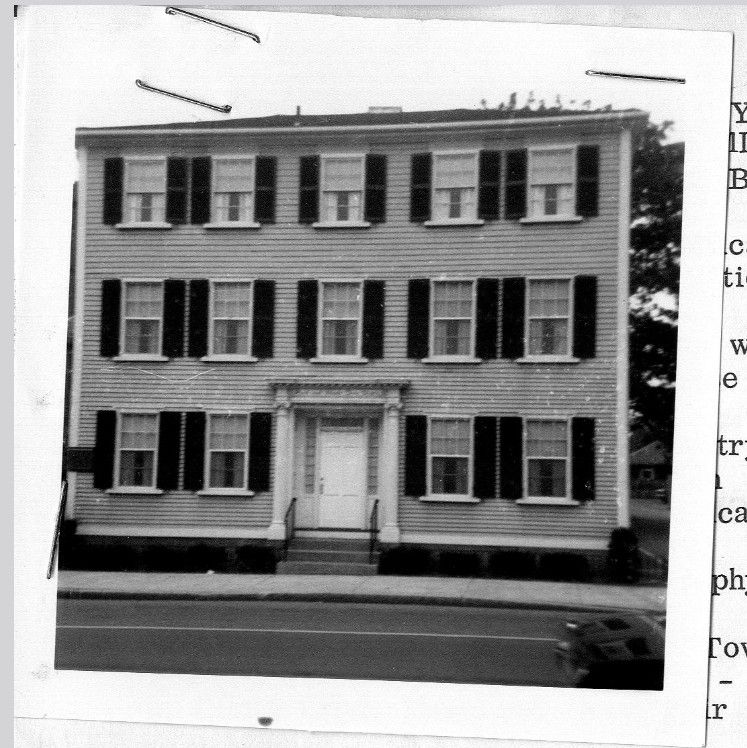
In 1811, Ward sold the house to mathematician and navigator Nathaniel Bowditch. The Bowditch family decided to sell the house and move to Boston in 1823, and between then and 1858, the house was owned by numerous owners, such as the Treadwell family, William Proctor, and Massachusetts General Hospital.
Local lawyer and future mayor of Salem, John B.F. Osgood, purchased the house in 1858 and owned it until 1911, after which it was subdivided into apartments and had numerous owners.
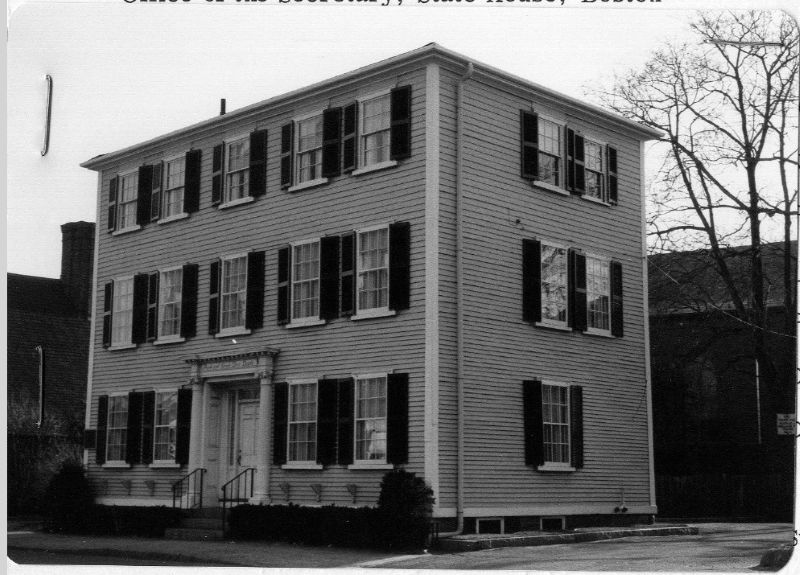
Although the house was originally located at 312 Essex Street, in 1944 Salem Mayor Edward A. Coffey helped organize a historic preservation group, called Historic Salem Inc., which raised $40,000, with an additional $10,000 from the city, to relocate both the Salem Witch House and the Nathaniel Bowditch House to save them from demolition during a road widening project on North Street.
The Bowditch House was moved in early March, and the Witch House was moved in April of 1946, and both properties were later given to the City of Salem.
On January 12, 1965, the Nathaniel Bowditch House was designated a National Historical Landmark. On October 15, 1966, the Nathaniel Bowditch House was added to the National Register of Historical Places.
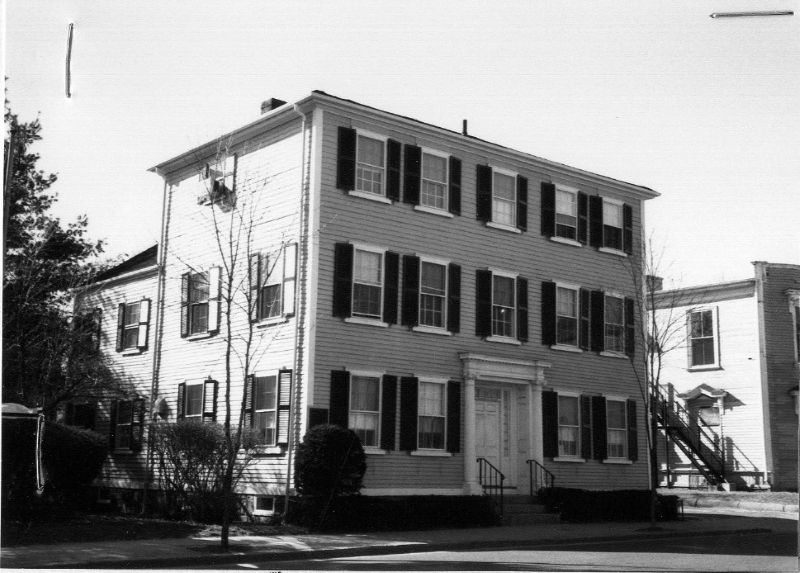
After World War II, the Nathaniel Bowditch House was used for veterans’ housing, and it was used as municipal offices for the city until 2000.
In June of 2000, the City of Salem deeded the Bowditch House back to Historic Salem Inc., which restored the house and began using the first floor as its headquarters. The second and third floors are leasable office space, which generates revenue for maintenance of the building.
Sources:
“Historic Building Detail: SAL.1511 Bowditch, Nathaniel House.” MACRIS, mhc-macris.net/details?mhcid=SAL.1511
“The Nathaniel Bowditch House.” Historic Salem Inc, historicsalem.org/the-bowditch-house.html
“Nathaniel Bowditch House.” The Historical Marker Database, hmdb.org/m.asp?m=220797
“Witch House Moved in Order to Widen Street.” The Boston Post, 10 Mar. 1946, p. 22.
“Historic Houses in Salem Moved Around.” The Boston Post, 7 Mar. 1946, p. 11.