
Roger Babson was an American entrepreneur, businessman, and philanthropist from Gloucester, Massachusetts.
Born on July 6, 1875, in Gloucester, Massachusetts, to Nathaniel Babson and Ellen Stearns, Roger was the 10th generation of Babsons to live in Gloucester.
Babson was also a descendant of the Putnam family of Salem Village on his mother’s side. His mother, Ellen Stearns, was the granddaughter of Mary Putnam.
As a child, Babson had a job selling fruit and vegetables from a milk wagon for his grandfather’s farm, and he stated that he and his classmates walked two miles to school and back twice a day and attended church and Sunday school regularly (Babson 1959.)
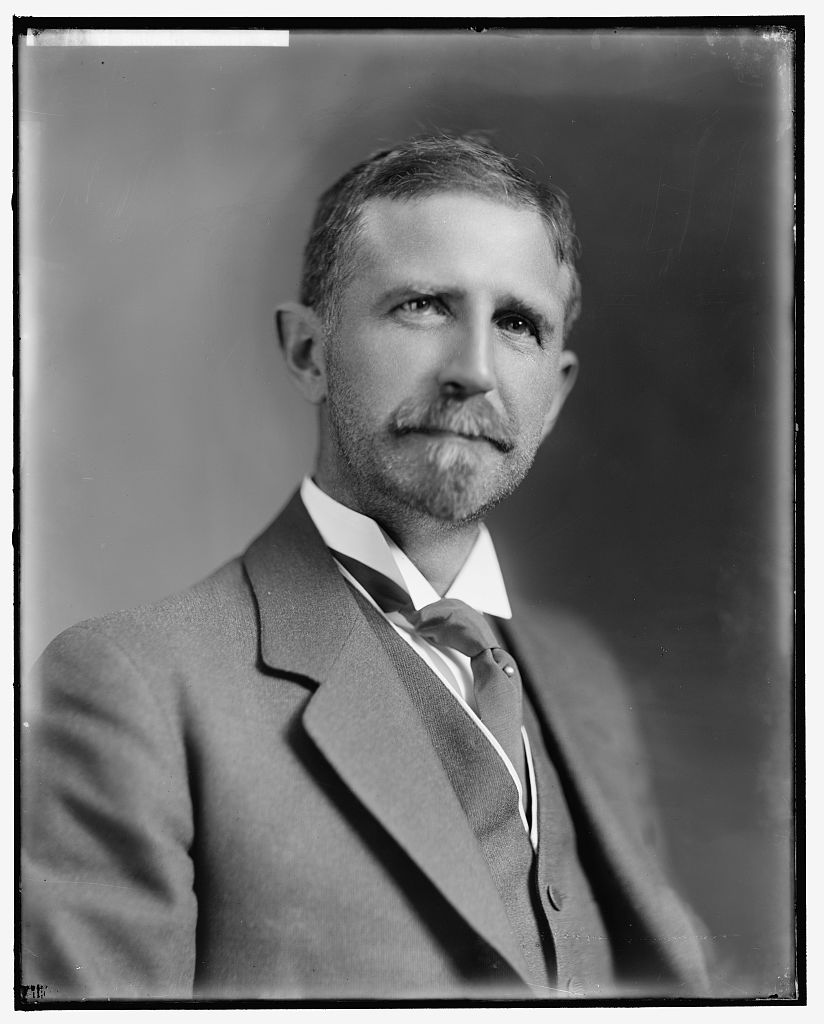
Babson later attended Gloucester High School and the Massachusetts Institute of Technology, where he graduated in 1898 with a degree in engineering. Upon graduation, Babson began working as an investment banker for a Boston investment firm.
In 1900, Babson married Grace Margaret Knight in St. Paul, Minnesota, and moved to Wellesley Hills, Massachusetts.
After Babson contracted tuberculosis in the fall of 1901, he temporarily relocated to the milder climate of the American Southwest, seeking a “fresh air” cure. Babson returned to Massachusetts shortly after, though, determined to fight the disease, and decided to start his own investment business.
On December 6, 1903, Edith Low Babson, Roger and Grace’s only child, was born.
In 1904, Roger and Grace Babson founded the Babson Statistical Organization, which provided clients with Babson’s analysis of stocks and bonds. The company was a financial success, and Babson soon expanded into predicting stock market trends.
To combat his tuberculosis, Babson and his staff worked in an open-air office at their home in Wellesley Hills, even in the dead of winter, during which he and his staff bundled up in blankets, mittens, and heavy overcoats while they worked.
From 1910 to 1923, Babson also served as a regular columnist for the Saturday Evening Post, where he wrote about business and other related topics. He later formed the Publishers Financial Bureau to syndicate his writings to papers across the country.
In early 1918, Babson was appointed as a special agent of the U.S. Department of Labor’s Employment Service. In this new role, Babson declared that the failure of manufacturers to increase wages to keep up with the increased cost of living “may be the weakest of our industrial structure.” (“Employers Slow to Raise Wages,” 3.)
In June 1919, Babson founded Babson College in Wellesley Hills, which is a private college that specializes in business education and is still in business today.
After the success of Babson College, Babson went on to found Webber College in Babson Park, Florida, in 1927, which provided business education to women.
Also in 1927, Roger Babson and his cousin Gustavus Babson purchased 1,150 acres of land in Dogtown, a ghost town in Gloucester where Babson’s ancestors once lived in the 17th century, and they began cataloging the cellar holes of the houses that once existed in the town.
Due to Babson’s financial expertise, he became the first financial forecaster to predict the stock market crash of October 1929.
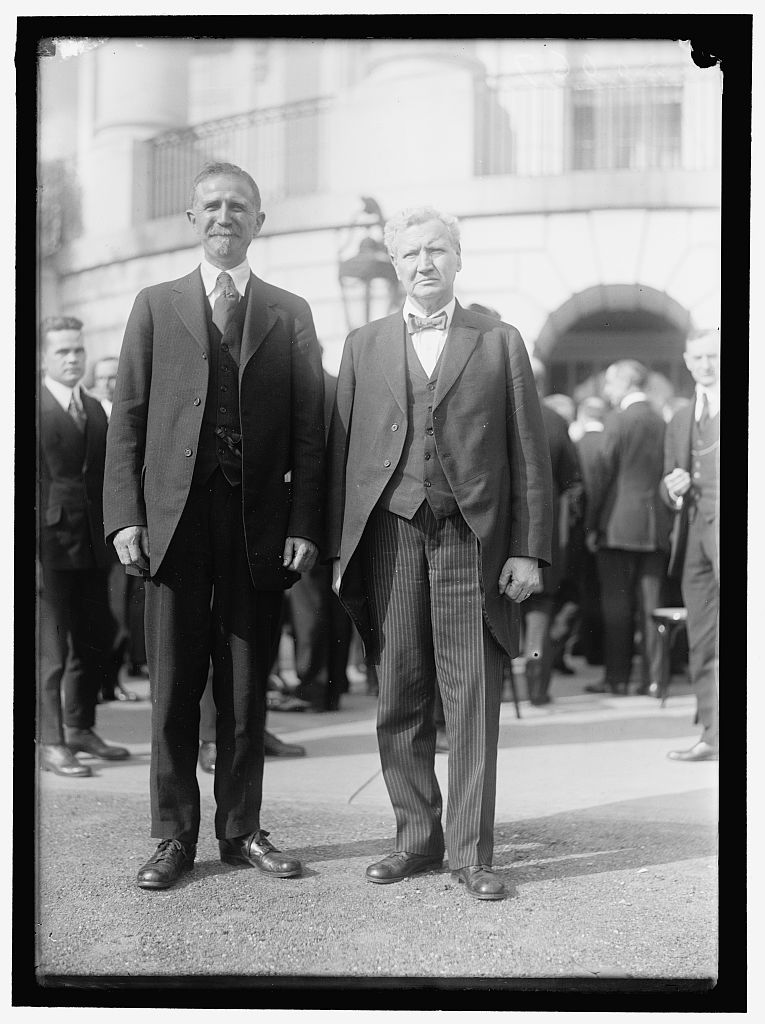
After the stock market crashed, Roger Babson then hired 35 unemployed Finnish stone cutters to carve inspirational quotes into the boulders scattered across Dogtown. The carvings say things like “Be On Time,” “Study,” “Never Try, Never Win,” and “If Work Stops, Values Decay.”
Babson later sold his land in Dogtown to the City of Gloucester in 1930 so the city could establish a reservoir on the land and protect Dogtown as a public park.
Hoping to expand into politics, Babson ran for president of the United States in 1940 as the candidate for the National Prohibition Party. Fully aware that his party was unlikely to win, Babson felt it was his duty to bring his party’s moral and religious agenda to a national level.
In 1946, Babson founded Utopia College, in Eureka, Kansas, which was a two-year, certificate-granting school specializing in business education.
In 1948, Babson created the Gravity Research Foundation to help the science community expand upon Isaac Newton’s studies of gravity, with the hopes that the invention of a perpetual motion machine would solve the world’s dependence on nonrenewable fuels.
Babson’s wife, Grace Margaret Knight, died on April 30, 1956, at the age of 82 at their home in Wellesley Hills. In 1957, Babson married his second wife, Nona M. Dougherty. Dougherty died six years later in 1963.
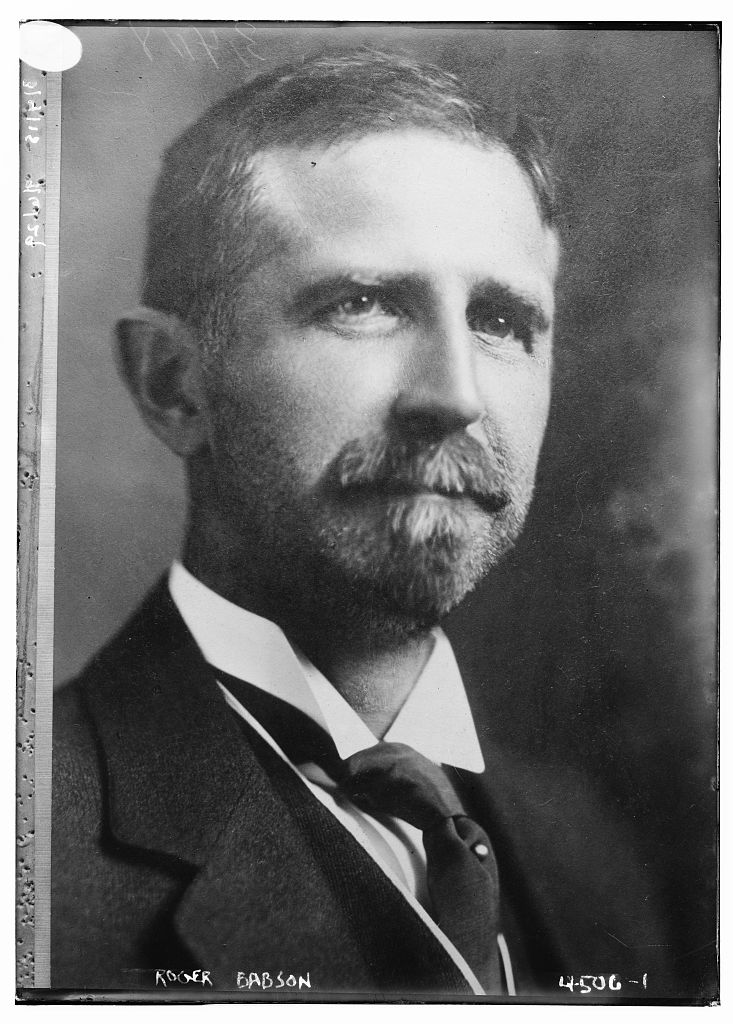
Babson wrote over 47 books in his lifetime on topics such as business, education, health, industry, politics, religion, social conditions, and travel and also published his autobiography, Actions and Reactions.
Babson died of natural causes on March 5, 1967, at the age of 91 at his ranch in Lake Wales, Florida, where he often spent his winters.
Sources:
“Babson College History.” Babson College, babson.edu/about/babson-at-a-glance/our-story/babson-college-history/
“Roger Ward Babson (1875–1967).” Babson Centennial, centennial.babson.edu/past/roger-babson/
“Roger Ward Babson.” Find a Grave, findagrave.com/memorial/97662536/roger_ward-babson
“Heads New Labor Division.” R.W. Babson, Statistician, to Deal with Industrial Relations.” New York Times, 17 Feb. 1918, nytimes.com/1918/02/17/archives/heads-new-labor-division-rw-babson-statistician-to-deal-with.html
“Employers Slow to Raise Wages.” Youngstown Vindicator, 18 Feb. 1918, p. 3.
“Coalition Attacks Babson’s Statement on Market Collapse.” Meriden Record, 21 Nov. 1929, p. 1.
“Mother of Roger W. Babson Dead.” The Boston Transcript, 2 Nov. 1929, p. 12.
“The Upturn.” Middlesboro Daily News, 17 Apr. 1931, p. 7.
“Babson Replies to Dogtown Criticism.” The Boston Post, 10 Jul. 1932, p. 21.
“Babson Advises Business Men to Read Bible More.” Middlesboro Daily News, 6 Nov. 1935, p. 6.
“Through the Years with Eminent Bostonians: Roger W. Babson.” The Boston Herald, 13 Oct. 1935, p. 78.
“Mrs. Roger Babson.” The Boston Globe, 1 May. 1956, p. 23.
Babson, Roger W. “What Babson Thinks – Live Seeds, Once Important in Diet, May Again Take Place of Vitamins.” The Washington Observer, 22 Sept. 1959, p. 4.
“Babson Background.” Middlesboro Daily News, 27 Dec. 1963, p. 9.
“Roger W. Babson Market Advisor Dies at Age 92.” Clinton Daily Item, 6 Mar. 1967, p. 4.
“Roger Babson, 92, Economist, Dead.” The New York Times, 6 Mar. 1967, nytimes.com/1967/03/06/archives/roger-babson-92-economist-dead-founded-advisory-service-on-stock.html