
Lyceum Hall is a historic public lecture hall on Church Street in Salem, Massachusetts. The word “lyceum” means “an association providing public lectures, concerts, and entertainments.”
The hall was built by the Salem Lyceum Society on the former site of Bridget Bishop’s apple orchard and house. The Salem Lyceum Society purchased the lot of land, which was owned by the Oliver estate, for $750 and spent $3,036 building the hall.
Construction on the building began in early November of 1830 and was completed within a few months. The hall opened to the public on January 19, 1831, with a dedication ceremony that featured a prayer by Reverend Brown Emerson and an address by Stephen C. Phillips.
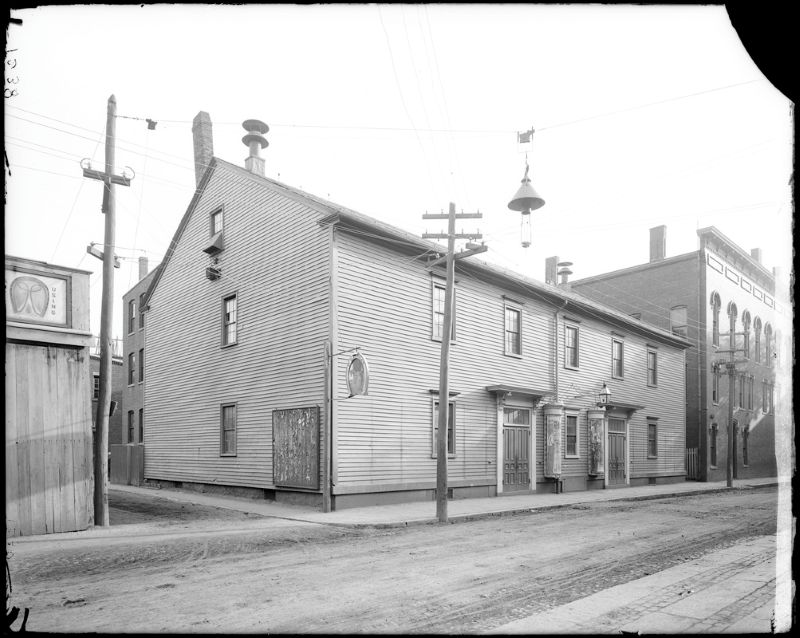
The building was originally a wood-frame structure with clapboarding. The hall had an amphitheater that seated about 600 people. It also held a large library with an expansive collection of natural history artifacts and mineralogy samples and it offered lectures about history, science, and art.
Many notable speakers delivered lectures at the Lyceum, which included Daniel Webster, Ralph Waldo Emerson, Clara Barton, John Quincy Adams, Horace Mann, and Alexander Graham Bell.
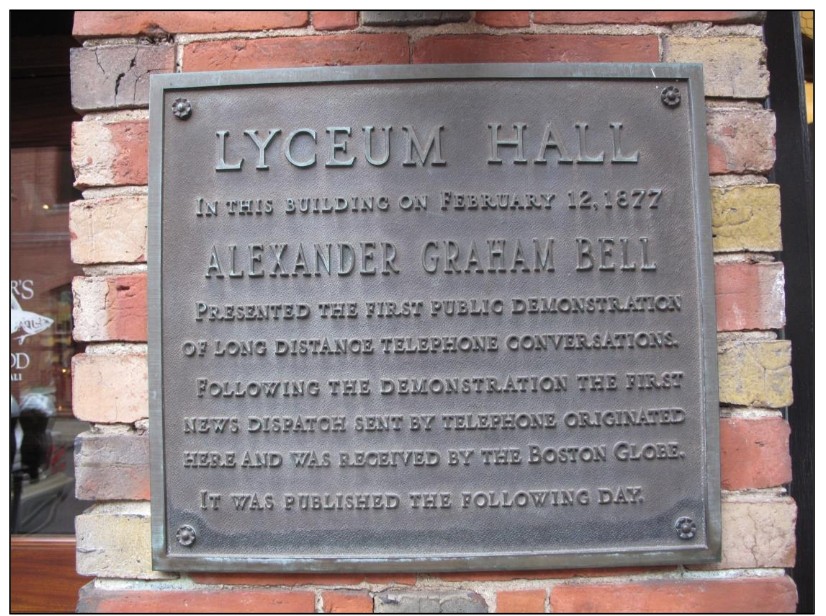
The first public exhibition of the telephone was made at the Lyceum by Alexander Graham Bell on February 12, 1877.
By the end of the 19th century, the building no longer functioned as a lecture hall and was instead renovated into offices in 1897, serving as offices for the Salem Mutual Fire Insurance Office, Salem Fraternity, and the City Missionary and Associated Charities.
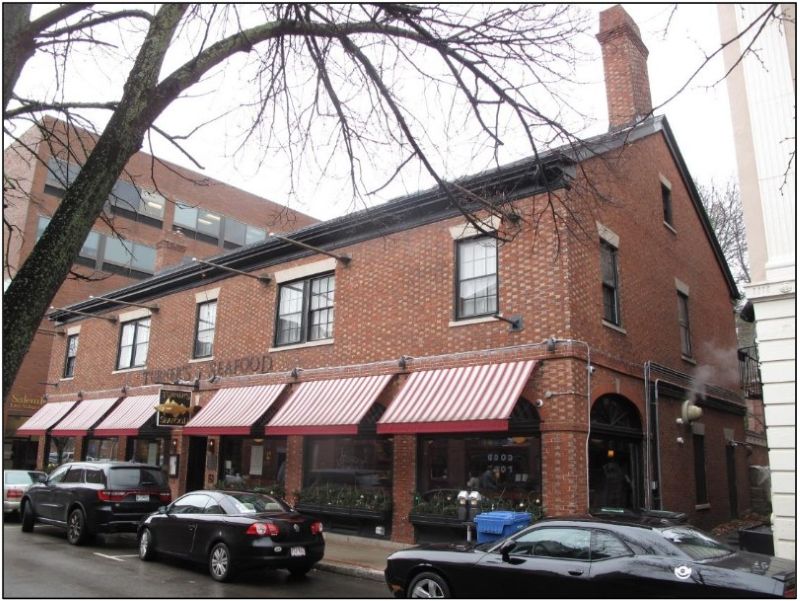
The Salem Lyceum disbanded in 1898. In 1900, the Lyceum transferred its library and records to the Essex Institute. The wood frame Lyceum building was eventually replaced with the current brick structure after it burned down during a fire at the turn of the century.
The current building is a two-story brick building with a gable roof. The first floor features six arched windows with a limestone keystone at the top of each arch and the second floor features three display windows with limestone sills.
In 1935, the building became home to the Colonial Cafe, where it remained for three decades. In 1969, the Salem Redevelopment Authority acquired the property as part of their urban renewal plan. In 1971, the building was sold to Joan and Joe Boudreau, who restored it with the help of local architect John Emerson.
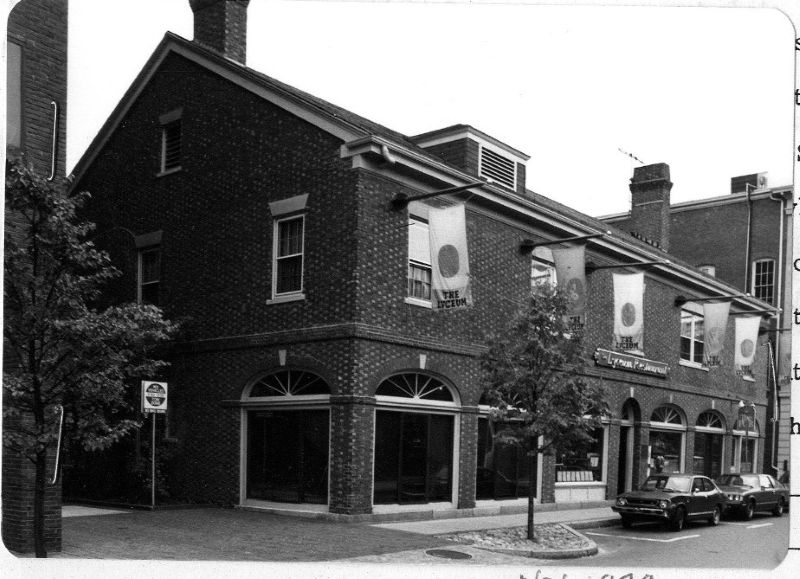
In 1972, a one-story lean-to was built out of steel and wood on the south side of the building when the building was undergoing a restoration. The Boudreau’s opened the Lyceum Restaurant in the building after the restoration was completed.
The Lyceum Hall was added to the National Register of Historic Places in 1983. Restaurateur George Harrington acquired the business in 1989 and later renovated the building in 2009.
In 2011, Harrington’s son, George Jr., took over ownership and opened a new restaurant called 43 Church after completing some renovations to the building. In 2013, the building became home to Turner’s Seafood restaurant.
Sources:
“Historic Building Detail: SAL.2449 Lyceum Hall.” MACRIS, mhc-macris.net/details?mhcid=SAL.2449
“Lyceum Hall.” Salem State University, libguides.salemstate.edu/home/archives/blog/Lyceum-Hall
“Lyceum Hall.” The Historical Marker Database, hmdb.org/m.asp?m=115324
“The History of 43 Church Street in Salem.” Turner’s Seafood, turners-seafood.com/turners-salem-location-history
“Farewell, Lyceum.” Salem Gazette, 30 Jun. 1900, p. 1.
Morse, Edward S. “Three Glimpses of Emerson.” The Boston Transcript, 20 My. 1903, p. 18.