
Boston is famous for its history. The city’s geological features were carved by glaciers over 20,000 years ago, and it has been occupied by humans for more than 12,000 years.
The area was once home to the Massachuset tribe before being settled by colonists in the 17th century and becoming the birthplace of the American Revolution in the 18th century.
Since then, Boston has grown and transformed over the centuries into the modern, yet still historic, city it is today.
The following is a timeline of the history of Boston:
Around 25,000 years ago:
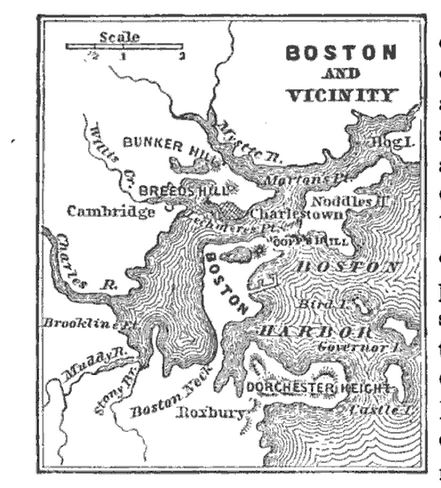
- The Laurentide Ice Sheet, which formed in Canada around 75,000 years ago, reaches New England and creates many geological features in Boston, such as Boston Harbor, known as the Boston basin; the Boston Harbor Islands; and numerous glacial drumlins, such as Camp Hill, Parker Hill, Meeting House Hill, Monterey Hills, Beacon Hill, Mt. Vernon, Fort Hill, Pemberton Hill, Copp’s Hill, Bunker Hill, and Dorchester Heights.
Around 21,000 years ago:
- The climate warms and the ice sheet retreats, dropping the rock dust and clay it is carrying, which is carried into the ocean by melting water and settles in Boston Harbor, forming a thick layer of Boston blue clay.
Between 12,200 and 11,600 years ago:
- The ice sheet makes a short readvance and pushes some of the Boston blue clay at the bottom of Boston Harbor into a low ridge, forming Boston Neck, a small land bridge that once connected Boston to the mainland, creating the Shawmut Peninsula. The glacier then fully retreats, leaving Boston ice-free and open to nomadic paleo-indians who begin to frequent the Boston basin.
Between 8,000 and 6,500 B.P.:
- Around 29 sites are established by Archaic peoples in the Greater Boston area, including on the Boston Harbor Islands.
Between 3,000 and 500 B.P.:
- The number of sites established by Woodland peoples in the Greater Boston area decreases as these indigenous people begin to move to Cape Cod and other low-lying coastal areas.
- The Woodland peoples who remain in the greater Boston area eventually form the Massachuset tribe, who name their village Shawmut.
1605:
- On July 17, French explorer Samuel de Champlain visits Boston Harbor and the harbor islands.
1616-1619:
- An epidemic breaks out in the Native-American villages in coastal New England. Shawmut Village is hit hard by the epidemic, and its population is greatly reduced.
1623:
- After the Gorges colony fails in Weymouth, colonist Reverend William Blackstone moves to Boston and settles on what is now modern-day Boston Common.
1630:
- In April, members of the Massachusetts Bay Company, led by John Winthrop, leave their homes in Boston, England, and sail from Southampton towards the New World.
- On June 12, the Winthrop fleet lands in Salem, Massachusetts, but the existing colony there doesn’t have enough space for the new colonists, so they continue on to Charlestown.
- Blackstone invites Winthrop and the Massachusetts Bay Colony to live on the Shawmut Peninsula, which is modern-day Boston.
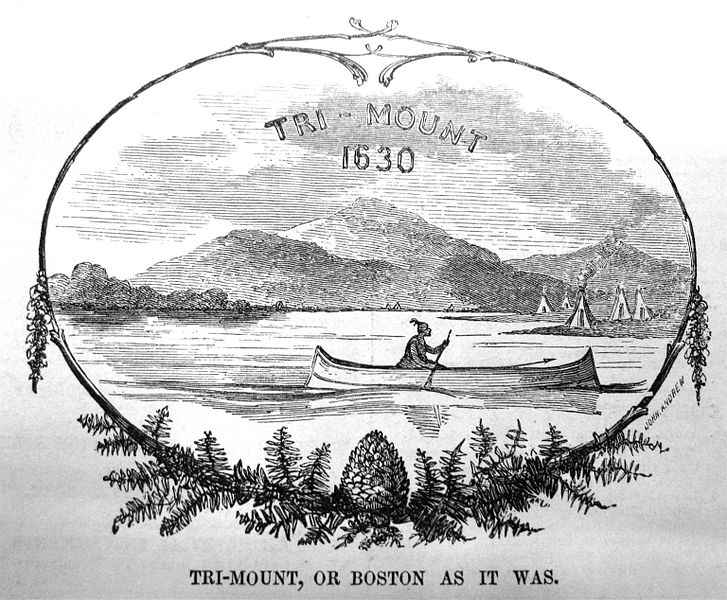
- On September 7, the Massachusetts Bay colonists officially name their new settlement Boston.
- A Puritan burying ground is established on Tremont Street, now known as the King’s Chapel Burying Ground.
1632:
- Boston is officially named the capital of the Massachusetts Bay Colony.
1634:
- On September 18, Anne Hutchinson arrives in the Massachusetts Bay Colony and settles in Boston, where she and her husband build a house on the corner of what is now modern-day Washington Street and State Street.
- The Massachusetts Bay Colony purchases Boston Common from William Blackstone for use as common land.
1637:
- On November 7, Anne Hutchinson is brought to trial for sedition.
1639:
- On November 6, the first post office is established in Boston.
1640:
- The population of Boston is 1,200.
1643:
- On February 26, the first slaves brought directly from Africa to Massachusetts arrive in Boston.
- On May 10, Salem Witch Trials victim Samuel Wardwell is born in Boston.
1645:
- The Boston Latin School opens on School Street.
1649:
- On March 26, John Winthrop dies of natural causes and is buried in King’s Chapel Burying Ground.
1659:
- Copp’s Hill Burying Ground is established on Hull Street.
1660:
- On June 1, Mary Dyer is hanged on Boston Common for defying a law banning Quakers from the Massachusetts Bay Colony.
- The Granary Burying Ground is established on Tremont Street.
1663:
- On February 12, Cotton Mather is born in Boston.
1665:
- An almshouse was built on what is now Park Street.
1672:
- The first trial and execution of pirates in Boston takes place when the crew of the Antonio stage a mutiny against their captain and are later arrested.
1673:
- The Upper Post Road portion of Boston Post Road is first laid out on January 1, 1673.
1674:
- The first bank in Boston is established.
1676:
- Boston has 4,000 residents.
1682:
- On November 28, Salem Witch Trials afflicted girl Betty Parris is born in Boston.
1686:
- On December 20, Sir Edmund Andros arrives in Boston and takes control of the Dominion of New England.
1688:
- A small wooden Anglican church, King’s Chapel, is built in a corner of an old Puritan burying ground on Tremont Street.
1689:
- On April 18, news of the Glorious Revolution in England sparks the Boston Revolt, during which the Dominion of New England is overthrown.
1690:
- On September 25, the first newspaper in the colonies, Publick Occurrences, is published in Boston.
1706:
- On January 17, Benjamin Franklin is born in Boston.
1711:
- The Pierce Hitchburn House is built in North Square.
1713:
- The Old State House is built on Washington Street.
1716:
- Boston Light, the first lighthouse in America, is built on Brewster Island in Boston Harbor.
1718:
- The Old Corner Bookstore is built on the corner of Washington and School Streets.
1722:
- On September 27, Samuel Adams is born in Boston.
1723:
- The Old North Church is built on Salem Street.
- Bridewell Prison was built next to the almshouse on what is now Park Street.
1726:
- On August 7, politician James Bowdoin is born in Boston.
1729:
- The Old South Meeting House is built on Washington Street.
1730:
- Boston has over 13,000 residents.
1731:
- On March 11, Massachusetts Attorney General Robert Treat Paine is born in Boston.
1734:
- In late December, Paul Revere is born in Boston.
1738:
- In July, painter John Singleton Copley is born in Boston
1740:
- Peter Faneuil begins construction on Faneuil Hall on Market Street.
1741:
- On June 11, Joseph Warren is born in Boston.
1742:
- In September, Faneuil Hall opens on Market Street.
1748:
- The small wooden King’s Chapel on Tremont Street is replaced with the granite building that still stands there today.
1750:
- Boston has over 15,000 residents.
- On July 25, Henry Knox is born in Boston.
1754:
- The Central Burying Ground is established on Boylston Street.
1755:
- The city builds a long wharf and a dam across the North Cove, creating a pond the colonists called Mill Pond.
1761:
- On July 11, Phillis Wheatley is purchased as a slave in Boston
1765:
- On August 14, the Stamp Act Riot takes place in Boston.
1770:
- On February 22, an 11-year-old boy named Christopher Seider is shot and killed by Ebenezer Richardson, a British customs official, during a protest.
- On March 5, the Boston Massacre takes place on King Street.
- On March 8, a funeral procession is held for four of the Boston Massacre victims, Crispus Attucks, Samuel Maverick, James Caldwell, and Samuel Gray, and they are laid to rest in Granary Burying Ground.
- On March 14, Patrick Carr dies of his wounds sustained during the Boston Massacre.
- On March 17, Patrick Carr is laid to rest in Granary Burying Ground with the other Boston Massacre victims.
- In October and November, the trials of the soldiers involved in the Boston Massacre are held at the Queen Street Courthouse. The majority of the soldiers are acquitted, but two are convicted of manslaughter.
- On December 14, the two British soldiers convicted in the Boston Massacre trial are branded on the thumb with the letter M for manslaughter.
- Paul Revere purchases a house in the North End of Boston, now known as the Paul Revere House.
1773:
- On December 16, the Boston Tea Party takes place in Boston Harbor.
1774:
- On March 25, Parliament passes the Boston Port Act, which orders Boston Harbor to close, effective June 1, until the colonists pay for the tea they destroyed during the Boston Tea Party.
1775:
- On April 19, the Siege of Boston begins after the battles of Lexington and Concord take place.
- On April 22, British General Thomas Gage meets with town officials to work out a deal that would allow civilians to leave or enter Boston during the siege.
- On May 21, the Battle of Grape Island takes place during the Siege of Boston.
- On June 17, the Battle of Bunker Hill takes place in Charlestown.
- On July 8, a skirmish occurs at Boston Neck.
- On July 21, the Battle of Brewster Island takes place during the Siege of Boston.
- In August, British troops cut down the Liberty Tree.
1776:
- On March 17, the Siege of Boston comes to an end.
- On August 14, a liberty pole is erected near the stump of the liberty tree to commemorate the Stamp Act Riot of 1765.
1781:
- On January 14, Abraham Lincoln’s first cousin, once removed, marries Paul Revere’s eldest daughter in Boston.
1791:
- The Massachusetts Historical Society is founded.
- On April 27, Samuel Morse is born in Boston.
1794:
- On April 11, Senator Edward Everett is born in Boston.
1795:
- On July 4, the Masonic cornerstone ceremony takes place, with Paul Revere presiding, as construction begins on the Massachusetts State House.
- The Bell In Hand tavern is established on Congress Street in the basement of the Exchange Coffee House.
1798:
- Construction on the Massachusetts State House is complete.
1800:
- The population of Boston is 25,000.
- In the early 1800s, Mount Vernon is cut down, and the soil is used to create the land where Charles Street is located along the river.
1801:
- On November 10, physician Samuel Gridley Howe is born in Boston.
1802:
- On March 26, Revolutionary War veteran Deborah Sampson performs in Boston.
1803:
- On May 25, Ralph Waldo Emerson is born in Boston.
1806:
- The African Meeting House is built on Joy Street.
1807:
- Construction workers begin cutting down Beacon Hill and Copp’s Hill and use the soil to fill in Mill Pond in what is now the modern-day Bullfinch Triangle neighborhood.
- On August 18, writer Charles Francis Adams Sr. is born in Boston.
1809:
- On January 19, Edgar Allan Poe is born in Boston.
1811:
- On January 6, Charles Sumner is born in Boston.
1813:
- On June 1, the Battle of Boston Harbor takes place during the War of 1812.
1814:
- The Boston and Roxbury Mill Corporation built a dam across the Back Bay.
1818:
- On May 10, Paul Revere dies of natural causes and is buried in Granary Burying Ground in Boston.
1819:
- St. Paul’s Church is built on Tremont Street.
- Construction begins on the Leverett Street Jail on Leverett Street.
1820:
- On September 2, journalist Lucretia Peabody Hale is born in Boston.
1822:
- The Leverett Street Jail opens on Leverett Street.
- On March 19, Boston is incorporated as a city.
1823:
- The Massachusetts General Hospital opens at the Bullfinch Building on Fruit Street.
- On September 16, historian Francis Parkman is born in Boston.
1825:
- On August 21 – 24, French commander and Revolutionary War hero Marquis de Lafayette visits Boston during his tour of the United States.
1826:
- On August 26, Quincy Market opens on Market Street.
- The Union Oyster House opens under its original name Atwood’s Oyster House on Union Street.
1828:
- Removal of Copp’s Hill and Beacon Hill is completed, and Mill Pond is filled in. Only Copp’s Hill Burying Ground remains.
1829:
- On January 24, composer and pianist William Mason is born in Boston.
1833:
- The city begins cutting down Fort Hill to fill in the wharves on the South Cove, including Griffin’s Wharf where the Boston Tea Party took place, in order to build railroad tracks there.
1835:
- The Boston & Lowell Railroad company cuts down Pemberton Hill and fills in tidal flats near Causeway Street to build railroad tracks.
- On June 11, Spanish pirate Don Pedro Gibert and four of his crew members are executed in Boston. Pedro becomes the last pirate executed in Boston.
1836:
- On February 24, painter Winslow Homer is born in Boston.
1837:
- Old West Church is built on Cambridge Street.
- On October 10, Robert Gould Shaw is born in Boston.
1838:
- On February 16, historian Henry Adams is born in Boston.
1841:
- On March 8, Oliver Wendell Holmes Jr. is born in Boston.
1842:
- The Bunker Hill Monument is established at Monument Square in Charlestown.
1845:
- The project to cut down Fort Hill and fill in the wharves is completed and adds 300 more acres and 60 percent more land to Boston.
- On April 16, nurse Mary Eliza Mahoney is born in Boston.
1846:
- On October 16, a Boston dentist demonstrates ether for the first time at Massachusetts General Hospital.
1847:
- On February 18, 1847, Bostonians hold a meeting at Faneuil Hall in response to the news of the Irish famine.
1848:
- Construction of the Charles Street Jail begins on Charles Street.
- The Boston Public Library is founded.
1849:
- A new Custom House is built in a new location on State Street.
1850:
- On August 30, 1850, John Webster is publicly hanged at the Leverett Street Jail for the murder of Dr. George Parkman.
1851:
- The Charles Street Jail is completed on Charles Street.
1854:
- On March 20, the Boston Public Library opens in a former schoolhouse on Mason Street.
- On March 31, serial killer Jane Toppan is born in Boston.
- On May 24, fugitive slave Anthony Burns is captured in Boston.
1855:
- On October 8, the Parker House Hotel opens on School Street.
1856:
- On September 3, architect Louis Sullivan is born in Boston.
1857:
- The city begins filling in the Back Bay by bringing 3,500 railroad cars of gravel from Needham and other areas each day for nearly 50 years.
- On March 23, culinary expert Fannie Farmer is born in Boston.
1858:
- The Boston Public Library relocates to a larger building on Boylston Street.
1862:
- Construction begins on Old City Hall on School Street.
1863:
- On April 9, John Wilkes Booth purchases property on Commonwealth Ave in Boston.
- On July 14, the Boston Draft Riots occur on Prince Street in the North End during the Civil War.
1864:
- On July 26, John Wilkes Booth meets with his fellow conspirators at the Parker House Hotel to hatch a plan to kidnap Abraham Lincoln.
1865:
- On February 2, Governor Andrew orders a 100-gun salute on Boston Common in celebration of the newly passed 13th amendment.
- On April 5, John Wilkes Booth arrives in Boston for a short trip during which he is seen at a local firing range practicing his pistol shooting just 10 days before assassinating President Lincoln.
- On April 17, after being detained in Boston by federal marshals following Lincoln’s assassination, Edwin Booth, brother to John Wilkes Booth, is released and allowed to return to New York City.
- Construction on Old City Hall is completed.
1867:
- On January 8, social activist Emily Greene Balch is born in Boston.
- On November 19, Charles Dickens arrives in Boston during a two-year reading tour of ‘A Christmas Carol’ and other stories.
- The West Cove is filled in, adding 203 new acres and 40 percent more land to Boston.
1872:
- On March 4, the Boston Globe publishes its first edition.
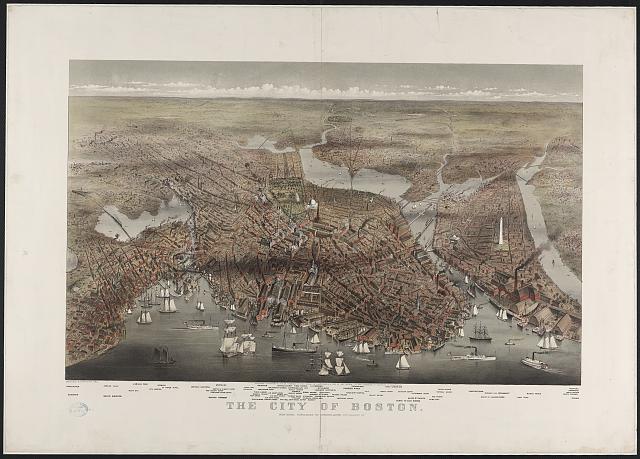
- On November 9, the Great Boston Fire begins in a warehouse basement on Sumner Street.
1873:
- Trinity Church is rebuilt on Clarendon Street after it was destroyed during the Great Boston Fire of 1872.
- Old South Church is built on Boylston Street.
1876:
- On July 4, the Boston Museum of Fine Arts opens to the public.
1880:
- On February 27, journalist Angelina Weld Grimke is born in Boston.
- On April 22, the City of Boston grants the Boston Public Library a plot of land at the corner of Dartmouth and Boylston Streets.
1882:
- The project to fill in the Back Bay is completed after nearly 50 years of construction. The project almost doubles the size of Boston.
1885:
- On January 5, Boston swears in its first Irish-born mayor.
1887:
- A marker is placed on the corner of State and Exchange Street to mark the exact spot where Cripus Attucks fell during the Boston Massacre.
1888:
- The Boston Massacre Monument is erected on Boston Common.
1889:
- Construction begins on the Ames Boston Hotel on Court Street.
1891:
- The Copley Square Hotel is built in the Back Bay.
1893:
- Boston’s first skyscraper, the Ames Building, is completed on Court Street.
- North Union Station opens on Causeway Street.
1895:
- On April 18, workers building the Boston subway discover human remains under Boylston Street.
- The Boston Public Library relocates to its new home on the corner of Dartmouth and Boylston Streets.
1897:
- On March 4, a gas explosion on Tremont Street kills 10 people and causes extensive damage to nearby buildings.
- On May 31, the Shaw Memorial is unveiled on Boston Common.
- On September 1, the Boston subway opens.
- The Buckminster Hotel is built on Beacon Street.
1899:
- In March, the newly constructed Massachusetts Historical Society building opens on Boylston Street.
1900:
- Symphony Hall is built on Massachusetts Avenue.
- The Lenox Hotel is built on Boylston Street.
1901:
- On March 17, 1901, Boston celebrates its first Evacuation Day.
1903:
- On February 23, the Isabella Stewart Gardner Museum opens in Boston.
1911:
- On February 8, poet Elizabeth Bishop is born in Boston.
1912:
- On April 20, Fenway Park opens to the public and hosts its first official game.
- On December 24, one of the first public Christmas trees in America is lit on Boston Common.
- The Fairmont Copley Plaza Hotel is built on James Avenue on the original site of the Boston Museum of Fine Arts.
1917:
- On March 1, poet Robert Lowell is born in Boston.
1918:
- On August 27, the 1918 flu epidemic begins in Boston.
1919:
- On January 15, the Great Molasses Flood takes place in Boston.
- The Black Sox Scandal takes place at the Buckminster Hotel.
1922:
- The first Federal Reserve Bank of Boston is built on Franklin Street.
1925:
- On June 27, the Harrison Gray Otis House in Boston is moved.
1926:
- On December 9, physicist Henry Way Kendall is born in Boston.
1932:
- On October 27, Sylvia Plath is born in Boston.
1940:
- On September 22, the Paul Revere Statue is unveiled in Boston.
1962:
- On June 14, police find the first victim of the Boston Strangler.
1984:
- On August 8, the 1629 Massachusetts Bay Colony charter is stolen from a display case at the Old Statehouse.
1985:
- In March, the stolen 1629 Massachusetts Bay Colony charter is found during a drug raid at an apartment in Dorchester.
1990:
- On March 18, thirteen works of art are stolen from the Isabella Stewart Gardner Museum.
1991:
- In September, construction begins on the Big Dig.
2001:
- On September 11, two commercial planes take off from Logan Airport and are hijacked and flown into the Twin Towers in New York City during the September 11 terrorist attacks.
2002:
- On October 4, the newly constructed Leonard P. Zakim bridge is dedicated.
2007:
- On December 31, construction on the Big Dig is completed.
2013:
- On April 15, the Boston Marathon Bombing takes place on Boylston Street.
If you want to learn more about the history of Boston, check out this article on the best Boston history books.
Sources:
Brooks, Rebecca Beatrice. “Timeline of the American Revolution.” History of Massachusetts Blog, 10 Nov. 2011, historyofmassachusetts.org/timeline-of-the-american-revolution/
Brooks, Rebecca Beatrice. “Timeline of the War of 1812.” History of Massachusetts Blog, 25 Jan. 2018, historyofmassachusetts.org/war-of-1812-timeline/
Brooks, Rebecca Beatrice. “Massachusetts Bay Colony Timeline.” History of Massachusetts Blog, 14 Dec. 2019, historyofmassachusetts.org/massachusetts-bay-colony-timeline/
“Boston’s Last Pirates.” Boston Public Library, bpl.org/blogs/post/bostons-last-pirates
“History of Faneuil Hall.” Faneuil Hall Marketplace, faneuilhallmarketplace.com/the-history-of-faneuil-hall/
“Union Oyster House History.” Union Oyster House, unionoysterhouse.com/pages/history.html
“1154 Boylston Street in Photographs.” Massachusetts Historical Society, masshist.org/features/online/photographs/1154
“BPL History.” Boston Public Library, bpl.org/bpl-history