
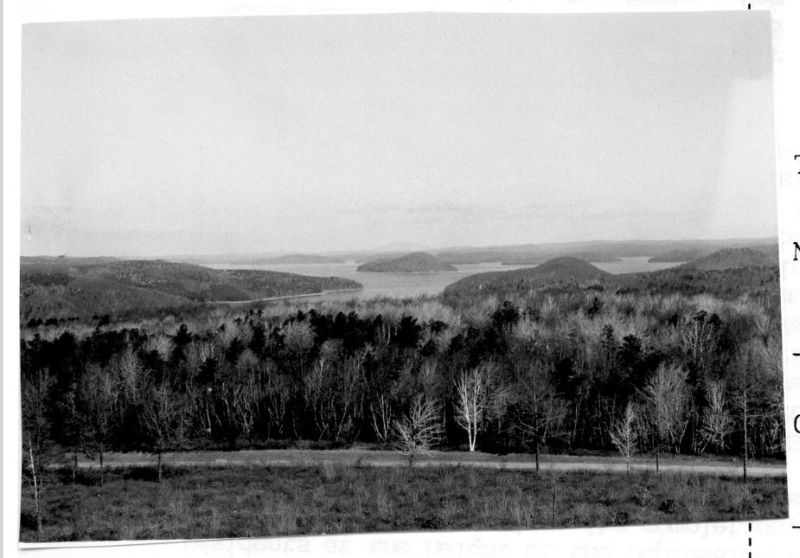
The Quabbin Reservoir is a reservoir in Central Massachusetts and is the largest inland body of water in Massachusetts.
Completed in 1939, the reservoir holds about 412 billion gallons and has a surface area of 38.6 square miles, extending from Belchertown to New Salem.
The construction of the reservoir is controversial because it involved flooding four towns in the Swift River Valley: Dana, Enfield, Greenwich, and Prescott and displacing 2,500 people that lived there.
Hundreds of houses, churches, schools, and businesses were relocated or demolished; 36 miles of new road were built; and 34 cemeteries were painstakingly relocated.
The reservoir was constructed after authorities realized in 1926 that the Wachusett Reservoir in Clinton could not supply enough water for the entire district during a dry season. The Massachusetts Legislature then appropriated $65,000,000 for the project.
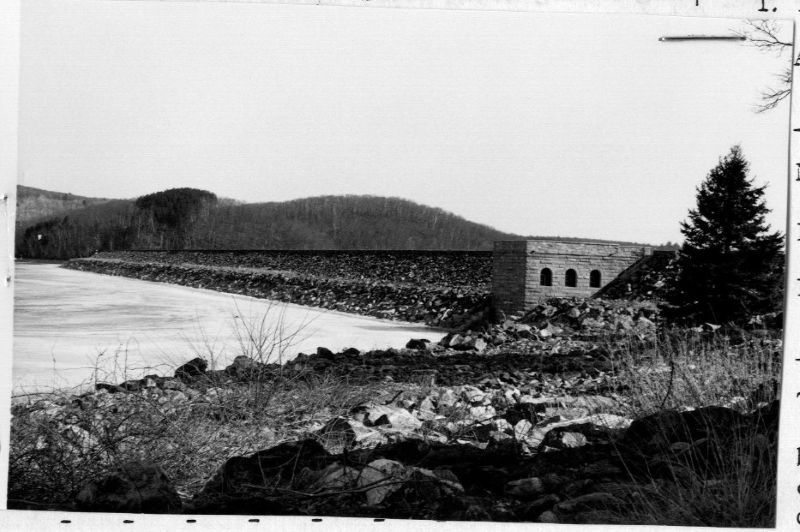
The Quabbin Reservoir was created by the construction of two immense earthen dams, each over 2000 feet long. The dams were named the Winsor Dam and the Goodnough Dike after two engineers associated with the Metropolitan District Water Supply Commission.
The Quabbin Aqueduct, a 25-mile-long underground tunnel designed to carry water from the Quabbin Reservoir to the Wachusett Reservoir, was built in two phases between 1927 and 1935. The first phase, the Ware-Watchusett segment, was built between 1927 and 1931. The second phase, the Quabbin-Ware segment, was completed in 1935.
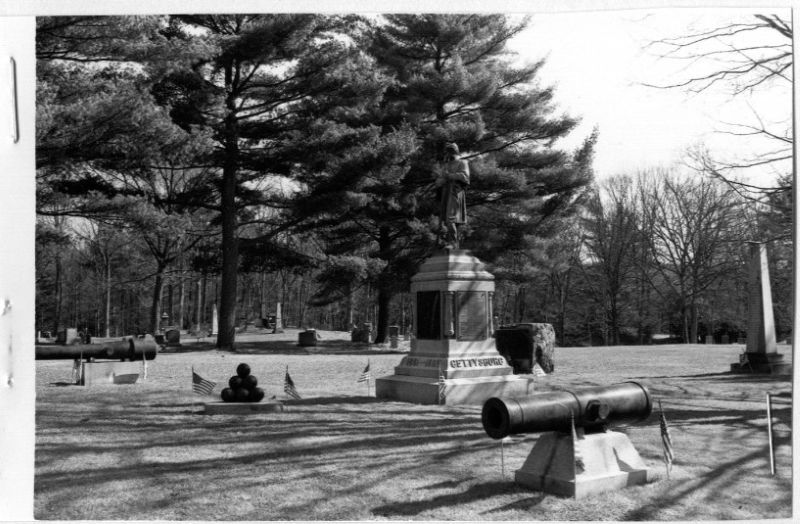
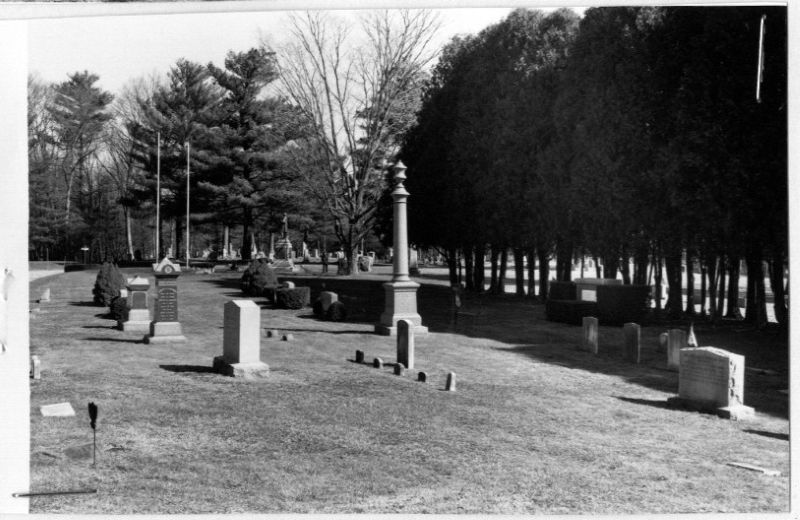
In 1932, the Quabbin Park Cemetery was built to reinter the 7,500 burials that had to be relocated. The first reinterment took place that year for Dana resident Nellie Hartt. The second was the reinterment of Fannie G. Eddy from the Enfield cemetery (“Quabbin Park Cemetery Ready,” 1932).
In 1932, the Metropolitan District Water Supply Commission voted to call the new reservoir Quabbin, which is a Nipmuck word meaning “place of many waters.”
In 1933, the Quabbin Park Cemetery was officially dedicated.
By 1934, the Metropolitan Distric Water Supply Commission had purchased 60,000 acres of land for the project.
In 1936, workers called “woodpeckers” began clearing the valley of all vegetation to a height of 10 feet above the flood line, and around 2,000 bodies had been reinterred in the Quabbin Park Cemetery by this date.
In 1938, the remaining land in the Swift River Valley was seized by eminent domain. All residents of North Dana, Enfield, and Greenwich were ordered to vacate their homes by April 1 so that the flooding of the Swift River Valley could begin in September when the Winsor Dam was projected to be finished (“Must Vacate by April 1,” 1938).
Families with school children were allowed to stay until June, and the post office remained open until July. A few families were granted extensions for a variety of reasons.
In March of 1938, officials held a farwell party at Enfield’s Town Hall for the residents being displaced by the reservoir project. Around 300 people attended the party where they danced and gathered together one last time before leaving their homes and towns forever, according to an article in the Boston Post:
“That is the reason why tonight’s party was so important. It was the last one, an official goodbye for families, some of whom have lived in town for five, six and seven generations. No one wanted the party at first, for there is still some resentment about having to give up their old homes. In fact, there are a dozen or more who have flatly refused to come to terms with the state” (“Farewell Party In Old Town Hall,” 1938).
At the end of the party, the guests sang Auld Lang Syne, and some broke down and cried.
On April 28, 1938, the towns of Enfield, Greenwich, Dana, and Prescott were disincorporated.
The dam wasn’t finished until July of 1939, though, after which a large diversion tunnel that channeled the Swift River around the construction site was plugged and the Quabbin Reservoir began the long process of filling, which was projected to take eight years (“It Will Take Eight Years to Fill Quabbin Basin,” 1939).
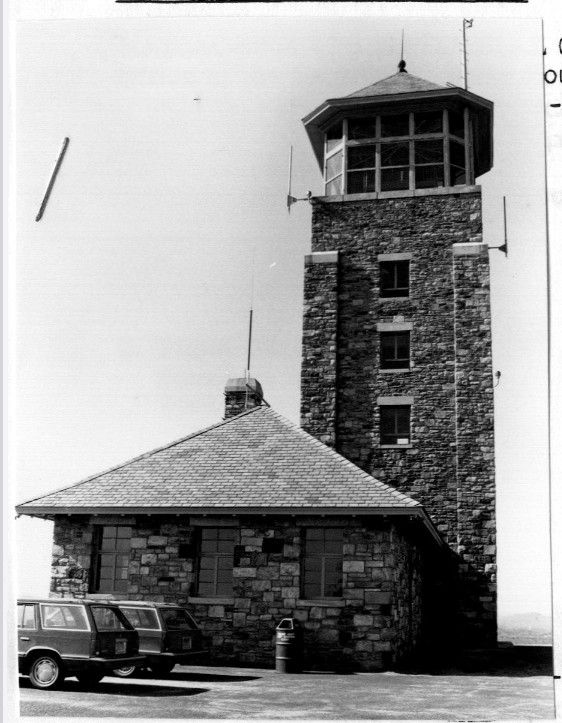
In 1940, the Quabbin Lookout Tower was built on Quabbin Hill Road to provide a radio tower, fire station, and observation tower to view the reservoir. The six-story tower has five floors of metal and concrete stairs. The top is a two-level glass-encased observation tower.
By April of 1940, around 6,180 burials had been reinterred at Quabbin Park Cemetery, with about 1,300 more to go. The cost of removal was about $10 a body (“Quabbin Cemetery,” 1940).
By September of 1940, the reservoir was one-sixth full after one full year of filling.
Officials held a dedication ceremony for the reservoir, officiated by Governor Saltonstall, on October 23, 1940.
By 1942, the reservoir was about 20 percent full after two years of filling.
By 1946, the reservoir was finally full, about a year earlier than expected, and the water supply was made available to the Greater Boston Area on June 22.
In April of 1952, fishing boats were allowed on the newly constructed reservoir for the first time in history.
Governor Michael Dukakis declared 1988 the official “Year of Remembrance” for the 50th anniversary of the disincorporation of the four Swift River Valley towns and held an anniversary party at the University of Massachusetts in Amherst that April to celebrate.
Sources:
Quabbin Facts and Figures. Friends of Quabbin, Inc., 1991.
“Historic Reservoir Detail: BAR.943 Quabbin Reservoir.” MACRIS, mhc-macris.net/details?mhcid=BAR.943
“Historic Reservoir Detail: BLC.940 Quabbin Reservoir.” MACRIS, hmhc-macris.net/details?mhcid=BLC.940
“Historic Area Detail: BLC.G Quabbin Reservoir.” MACRIS, mhc-macris.net/details?mhcid=BLC.G
“Historic Dam Detail: BLC.938 Quabbin Park – Winsor Dam.” MACRIS, mhc-macris.net/details?mhcid=BLC.938
“Historic Area Detail: BAR.G Quabbin Aqueduct.” MACRIS, mhc-macris.net/details?mhcid=BAR.G
“Historic Burial Ground Detail: WAR.802 Quabbin Park Cemetery.” MACRIS, mhc-macris.net/details?mhcid=WAR.802
“Quabbin Park Cemetery Ready.” The Boston Transcript, 13 Jul. 1932, p. 18.
“Great Water Supply Plan Half Done.” The Boston Transcript, 14 Feb. 1934, p. 19.
“Jobs for 3,000 to 5,000 Soon.” The Boston Post, 18 Apr. 1936, p. 2.
“Crowd of Applicants Seek Jobs on Quabbin Project.” The Boston Globe, 21 Apr. 1936, p.
Bartlett, K.S. “Quabbin, Massachusetts’ 65 Million Dollar Baby.” The Boston Globe, 13 Sept. 1936, p. 60.
“New Quabbin Reservoir to Give 5000 Jobs.” Leominster Daily Enterprise, 18 Apr. 1936, p. 8.
“Enfield and Prescott Ready for Their Last Presidential Election.” The Boston Globe, 2 Nov. 1936, p. 19.
“$45,000,000 Tunnel Plan.” The Boston Globe, 10 Dec. 1936, p. 10.
Peterson, Bernard. “Buildings Next Step in Quabbin Reservoir Job.” The Boston Transcript, 29 May. 1937, p. 43.
“Must Vacate by April 1.” Clinton Daily Item, 14 Jan. 1938, p. 2.
Carberg, Warren. “Farewell Party in Old Town Hall.” The Boston Post, 26 Mar. 1938, p. 1.
“Town of Enfield Disappears – Quabbin Reservoir Brings New Beauty to Map of Massachusetts.” The Boston Transcript, 6 Apr. 1938, p. 4.
“Clearing Project Begun.” Clinton Daily Item, 1 Nov. 1938, p. 1.
“Prepare for Filling.” Clinton Daily Item, 17 Mar. 1939, p. 1.
“The Problem at Quabbin.” Clinton Daily Item, 22 Jul. 1939, p. 1.
“Winsor Dam is Finished.” Clinton Daily Item, 24 Jul. 1939, p. 3.
“Water Starts Flowing Into Quabbin.” The Boston Globe, 16 Aug. 1939, p. 2.
Lyons, Louis M. “It Will Take Eight Years to Fill Quabbin Basin.” The Boston Globe, 27 Aug. 1939, p. 51.
“State Moves 6329 Bodies.” The Boston Transcript, 16 Nov. 1939, p. 4.
“Quabbin Cemetery.” Clinton Daily Item, 25 Apr. 1940, p. 5.
“Quabbin Reservoir Now One-Sixth Full.” The Boston Herald, 13 Sept. 1940, p. 17.
“Quabbin Reservoir Dedicated Yesterday.” The Boston American, 17 Oct. 1940, p. 5.
“Saltonstall Links Quabbin Reservoir.” The Boston American, 23 Oct. 1940, p. 11.
“Only 20 Percent Full.” Clinton Daily Item, 23 Jan. 1942, p. 7.
“Quabbin Reservoir Will Be Ready Saturday, June 22, to Supply Hub Area.” Clinton Daily Item, 6 Jun. 1946, p. 1.
Bartlett, K.S. “Quabbin Reservoir Filled to Overflowing Year Ahead of Schedule.” The Boston Globe, 16 Jun. 1946, p. 89.
“Winsor Dam Tapped to Release Overflow of Quabbin Reservoir.” The Boston Globe, 23 Jun. 1946, p. 1.
“Mighty Quabbin, Filled to Capacity for the First Time, Assures Water Supply Even With Five Rainless Years.” The Boston Post, 30 Jun. 1946, p. 31.
Dinnean, Joseph F. “Spigot Opens Huge Quabbin Water Supply.” The Boston Globe, 18 Sept. 1948, p. 17.
Bartlett, K.S. “How Huge Quabbin Reservoir Withstood the Drought.” The Boston Globe, 3 Oct. 1948, p. 83.
“Quabbin Reservoir Down 18 Inches, But There Are At Least 400 Billion Gallons Left.” The Boston Globe, 21 Aug. 1949, p. 99.
Banner, Earl. “Opening Quabbin ‘Greatest Thing That Could Happen to Fishing in this State.’” The Boston Globe, 20 Apr. 1952, p. 69.
“Quabbin Reservoir Reel Angler Fishing Grounds.” Cranston Herald, 28 Aug. 1952, p. 12.
Eisenberg, Harry. “Quabbin Reservoir Is Only 58 Percent Up to Capacity.” Lewiston Evening Journal, 9 May. 1969, p. 8.
Tynan, Trudy. “1988 To Be ‘Year of Remembrance’ for Vanished Massachusetts Towns.” The Catholic Press, 13 Dec. 1987, p. 92.