
Prescott, Massachusetts, was a town in the Swift River Valley that was lost when the town was submerged due to the Quabbin Reservoir project.
Prescott was originally settled as a parish of Pelham in 1742. In 1744, the first cemetery was established in the southwest part of Prescott.
In 1754, the first school house was built on East Hill, which later came to be known as Prescott Hill, and the Fish Hill Cemetery was established in 1772.
Prescott was officially incorporated on January 28, 1822, and was named after Colonel William Prescott, commander of the American forces at the Battle of Bunker Hill in 1775. The town had a total of 12,700 acres.
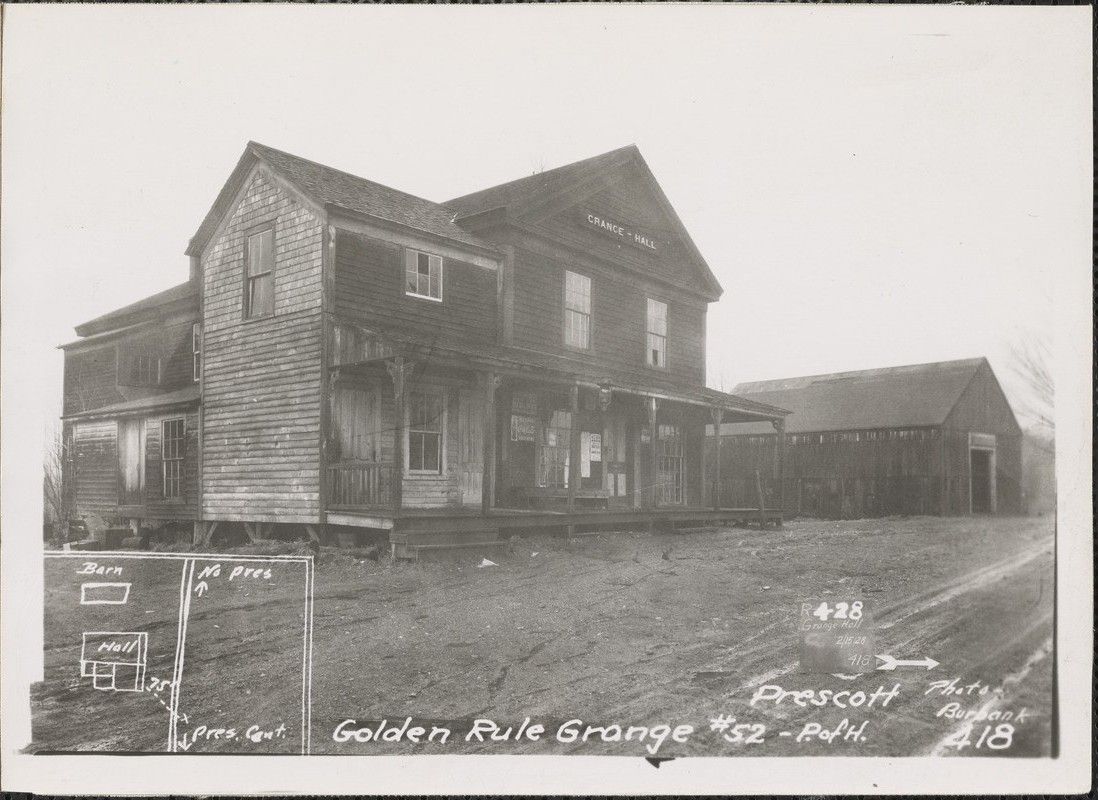
The first town meeting was held in Prescott on February 18, 1822, and the Prescott post office opened later that year on June 18, 1822.
In 1830, the population of Prescott was 758.
In 1838, the town hall, a Greek Revival-style building, was built in Prescott. A small cemetery was also established behind the town hall that year. Eliza Ann Titus, who died March 4, 1840, was the first person to be buried there.
On September 19, 1845, the North Prescott post office opened.
On April 15, 1847, another cemetery was established near the Brick Meeting House. There was also another small cemetery located in the East part of town but it’s not clear when it was established.
In 1863, the town bought Euclid Owen’s farm for $1,800 to use as a poor farm. The town operated the poor farm for several years, but after a while there weren’t enough paupers in town to pay to run the farm, so it was closed, and the remaining paupers were boarded with local families.
By 1863, the population of Prescott was 596, and the town had 87 school children in the summer and 128 in the winter.
By 1870, the population of Prescott was 541. In 1878, Prescott had 100 school children and a budget of $500 to maintain its six schools.
Sometime around 1880, a small private cemetery, Pine Grove Cemetery, was established near North Prescott Place.
In 1900, the population of Prescott was 380. By 1920, the population of Prescott had dropped to 236, and the town only had 49 school children.
On August 25, 1922, Prescott celebrated its centennial. Even though the town was founded in January, a summer date was chosen for the celebration. The event was held at Atkinson Hollow because the site was an equal distance between Prescott and North Prescott.
On December 31, 1924, the Prescott post office closed, and a few years later, on September 6, 1927, the North Prescott post office also closed.
In 1928, Prescott held its last town meeting and the Metropolitan District Water Supply Commission took over administration operations for the town.
By 1930, the Metropolitan District Water Supply Commission had purchased 40,000 acres of land in the Swift River Valley for the Quabbin Reservoir project. At the time, the population of Prescott was 48.
Also in 1930, the Prescott Congregational Church was purchased by Joseph Skinner and moved to Mount Holyoke College.
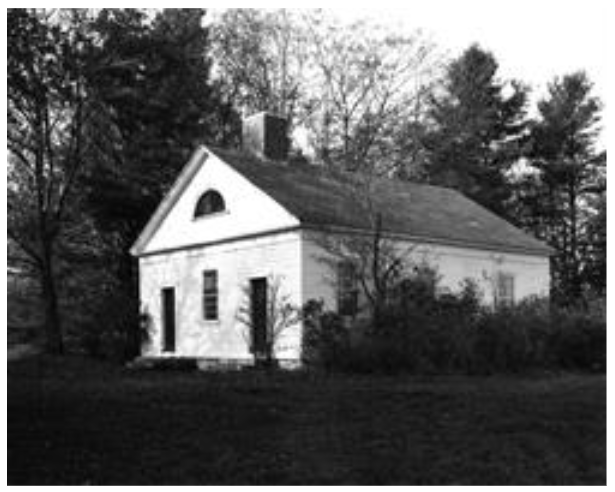
In 1931, the town hall building was relocated to Petersham, Massachusetts, by Judge John Monroe Woolsey. Woolsey used the building as his office and law library.
On August 26, 1932, the Prescott Historical Society was founded at the Old Home Day celebration with a total of 28 members.
By 1934, the Metropolitan District Water Supply Commission had purchased 60,000 acres of land for the Quabbin Reservoir project. In 1935, the population of Prescott was 18.
On April 28, 1938, Prescott was disincorporated. On August 14, 1939, the Quabbin Reservoir began to fill. Since Prescott is at a higher elevation, the majority of the town remains above water and is known as Prescott Peninsula.
Governor Michael Dukakis declared 1988 as the official Year of Remembrance for the 50th anniversary of the disincorporation of Prescott and the other Swift River Valley towns, Greenwich, Dana, and Enfield, and a celebration was held at the University of Massachusetts in Amherst.
On February 21, 1989, the Prescott town hall was added to the National Register of Historic Places.
Sources:
Coolidge, Lillie Pierce. The History of Prescott, Massachusetts. 1959.
Howe, Donald W. Quabbin: The Lost Valley. The Davis Press, Inc., 1951.
Quabbin Facts and Figures. Friends of Quabbin, Inc., 1991.
“Historic Building Detail: PET.86 Prescott Town House.” MACRIS, mhc-macris.net/details?mhcid=PET.86
“Deep Under Water These Towns Must Lie.” The Boston Globe, 21 Nov. 1926, p. 87.
“18 Billion Gallons to Slake Your Thirst.” The Boston Post, 30 Jun. 1946, p. 31.